
Fort Lauderdale’s position as the yachting capital of the world demands marine electronics providers who deliver more than parts installation. Professional-grade navigation, communication, and monitoring systems require technicians with manufacturer certifications, comprehensive integration experience, and the ability to troubleshoot complex networked electronics across multiple vessel platforms.
The marine electronics landscape in Fort Lauderdale reflects the city’s unique maritime ecosystem. Deep-sea sportfishing vessels require radar systems paired with chartplotters and sonar that work together without signal interference. Superyachts demand enterprise-level network architecture connecting dozens of devices across entertainment, safety, and operational systems. Choosing the right provider means finding teams who understand these certified integrated solutions and can deliver them with precision.
The difference between competent service and professional excellence shows up in three areas: system integration that prevents compatibility conflicts, diagnostic capabilities that resolve intermittent failures other shops miss, and warranty-protected workmanship backed by manufacturer relationships. Fort Lauderdale boat owners face salt air corrosion, electrical system complexity, and rapid technology evolution that make vendor selection a critical decision affecting both safety and long-term operational costs.
This guide outlines the certification standards, service capabilities, and selection criteria that separate qualified marine electronics providers from general installers. Whether upgrading aging autopilot systems or commissioning full electronics packages on new builds, understanding these benchmarks ensures your investment delivers reliable performance when you’re offshore.
What Sets Certified Marine Electronics Professionals Apart
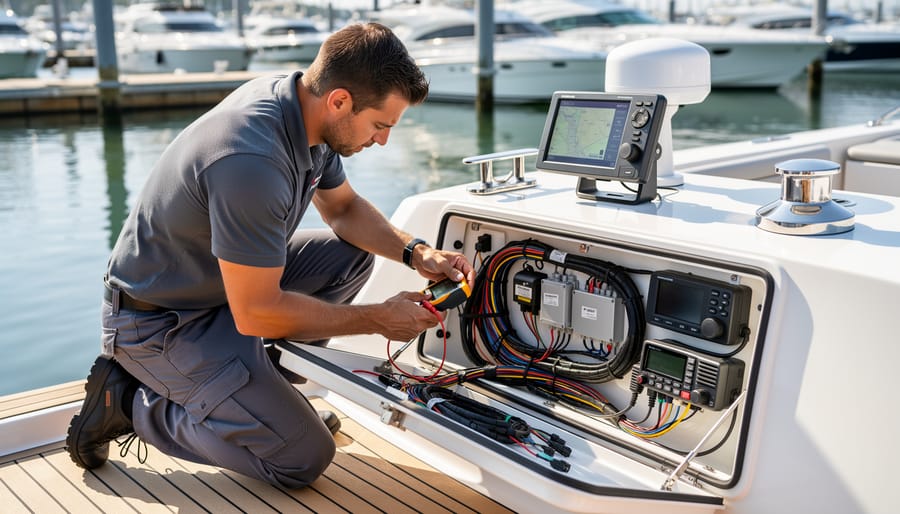
Certification in marine electronics represents more than credentials on a wall. It demonstrates mastery of complex electrical systems, commitment to industry standards, and proven ability to integrate multiple technologies into cohesive, reliable networks aboard vessels. When you choose a certified professional in Fort Lauderdale, you’re selecting someone who has passed rigorous examinations, maintains current knowledge of evolving marine technology, and adheres to established safety protocols that protect both your vessel and its occupants.
The National Marine Electronics Association (NMEA) and American Boat & Yacht Council (ABYC) set the benchmark for marine electronics competency. NMEA certification validates expertise in installing and servicing navigation equipment, communication systems, and integrated electronics networks. ABYC technician certification confirms proficiency in electrical system design, battery management, and compliance with safety standards. Beyond these foundational certifications, manufacturer-specific credentials from companies like Garmin, Furuno, and Raymarine demonstrate advanced knowledge of particular equipment lines and their integration requirements.
General installers may successfully mount equipment and run basic wiring, but certified professionals understand how seamless integration requires precise network configuration, proper grounding, signal interference mitigation, and power load calculations. They know which NMEA protocols ensure different manufacturers’ equipment communicates effectively, how to establish redundant systems that maintain functionality if primary components fail, and why proper termination prevents data corruption across integrated networks.
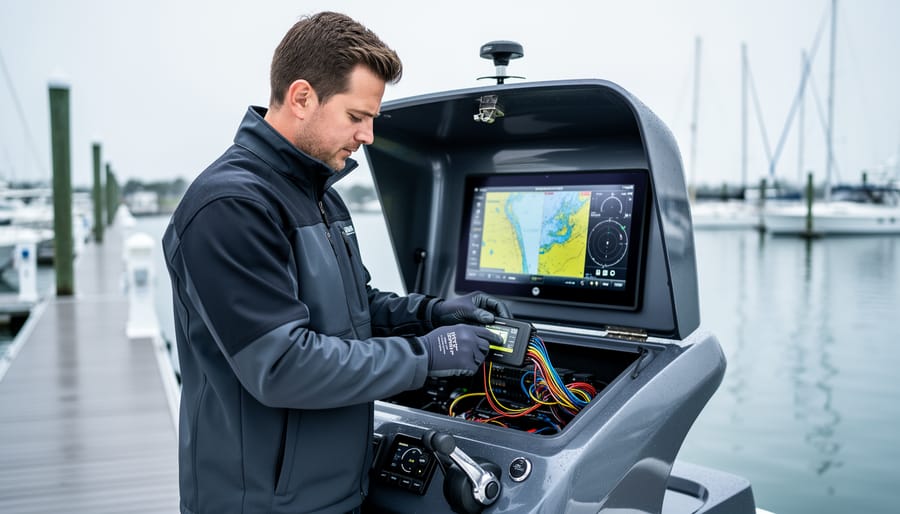
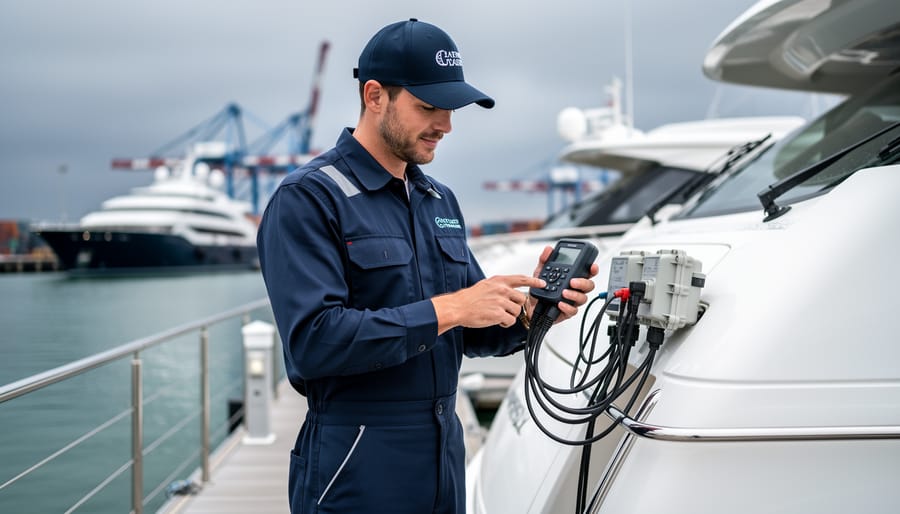
This expertise becomes crucial during troubleshooting. When a chartplotter freezes, radar displays erratic targets, or autopilot responds unpredictably, certified technicians systematically diagnose the root cause rather than replacing components until something works. They analyze network traffic, check voltage drops under load, verify proper shielding, and identify conflicting device configurations. This diagnostic capability prevents the expensive trial-and-error approach that often accompanies uncertified installations.
Certification also protects your investment through warranty compliance. Most marine electronics manufacturers require installation by certified technicians to maintain full warranty coverage. An improper installation by an uncertified installer can void warranties worth thousands of dollars, leaving you responsible for equipment failures that should have been covered.
Core Marine Electronics Services in Fort Lauderdale
Navigation and Communication Systems
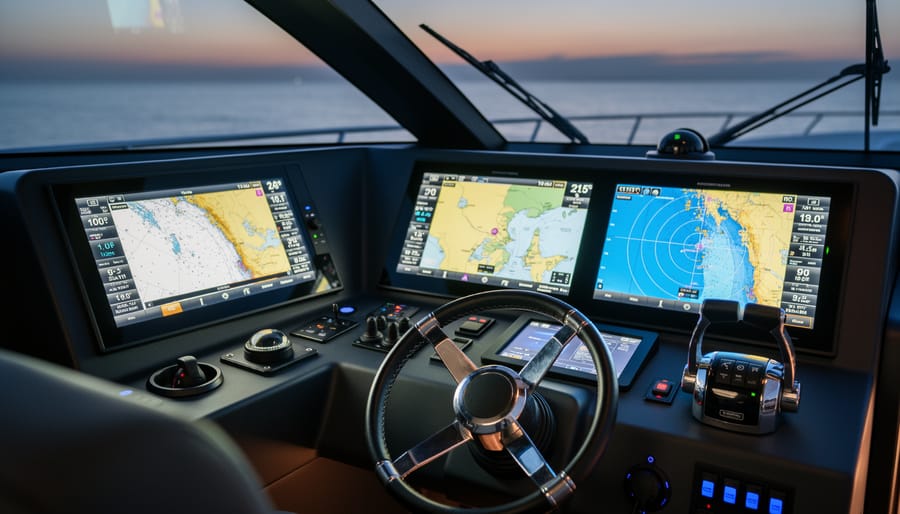
GPS chartplotters form the backbone of modern marine navigation, but their true value emerges through integration with complementary systems. A properly configured setup connects your chartplotter with radar for collision avoidance, AIS for vessel identification, and depth sounders for safe passage, creating a unified information display rather than isolated instruments competing for your attention.
Certified technicians ensure these connections use proper NMEA protocols (NMEA 0183 or NMEA 2000) so data flows reliably between devices. This integration allows your radar overlay to appear directly on your chart, AIS targets to display with course and speed vectors, and autopilot systems to respond to navigation software waypoints without manual intervention.
VHF radio installation requires more than mounting and connecting power. Professional installation includes proper antenna placement to maximize range, DSC (Digital Selective Calling) integration with your GPS for automated distress signaling, and hailer systems for docking communication. Satellite communication systems, whether Iridium, Inmarsat, or VSAT, demand precise antenna alignment and network configuration that casual installers often get wrong.
Redundancy planning separates adequate installations from professional ones. Certified providers design systems with backup GPS antennas, secondary VHF radios, and independent power sources for critical navigation equipment, ensuring you maintain situational awareness even when primary systems fail.
Electrical and Power Management
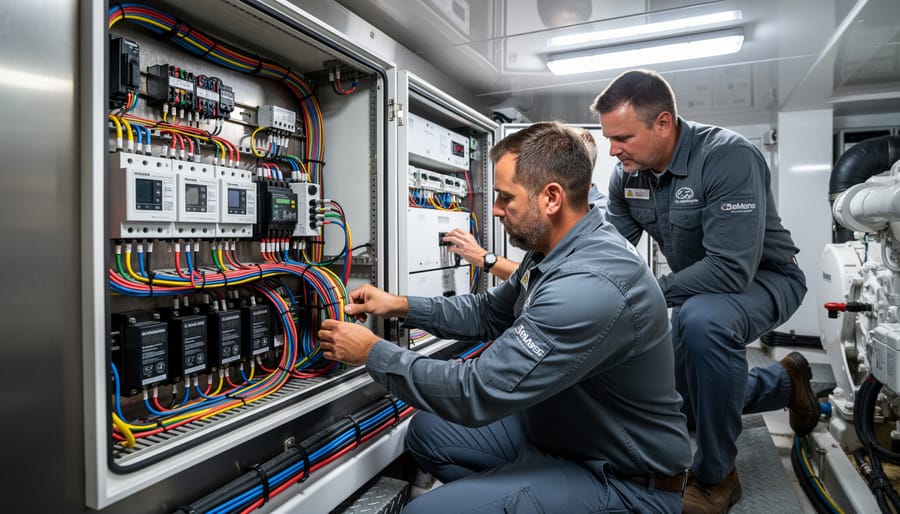
Electrical systems form the foundation of every marine electronics installation, requiring precise engineering to ensure reliable power delivery across all onboard components. Certified professionals in Fort Lauderdale approach electrical and power management as an integrated discipline, beginning with comprehensive load analysis to determine current and future power requirements.
Modern vessels benefit from sophisticated battery management systems that monitor charge states, balance loads across multiple battery banks, and protect against over-discharge. Lithium-ion batteries have transformed marine power storage, offering superior energy density and cycle life compared to traditional lead-acid options, but they demand specialized charging profiles and thermal management that only certified technicians can properly configure.
Solar power integration represents a growing area of expertise for Fort Lauderdale marine electronics professionals. Seamless Marine Electronics Solutions brings dedicated solar engineering capabilities to vessel installations, designing photovoltaic arrays that maximize charging efficiency while accounting for shading patterns, mounting constraints, and the vessel’s power consumption profile. Properly integrated solar systems reduce generator runtime, extend cruising range, and provide sustainable auxiliary power for electronics, refrigeration, and climate control.
Power distribution design extends beyond simple circuit breakers to encompass digital switching systems, remote monitoring capabilities, and fault isolation. Professional installations include proper wire sizing, corrosion-resistant connections, and protection devices calibrated to each circuit’s specific load characteristics. This engineering-focused approach prevents the voltage drops, overheating, and system failures that plague amateur electrical work, ensuring marine electronics receive clean, stable power under all operating conditions.
Custom Refits and System Upgrades
Custom refits and system upgrades demand a methodical approach that accounts for vessel-specific constraints and operational requirements. Certified professionals begin with detailed assessment of existing systems, evaluating power capacity, structural mounting points, and integration pathways before recommending equipment. This engineering-first methodology prevents common pitfalls like inadequate power supply, incompatible interfaces, or installations that compromise vessel integrity.
Modern upgrades typically involve replacing legacy electronics with networked systems that share data across multiple displays and sensors. A chartplotter upgrade, for instance, might integrate with existing radar, depth sounders, and autopilot systems through NMEA 2000 backbone architecture. Certified technicians ensure proper network termination, power distribution, and data prioritization to prevent signal conflicts or system failures.
Vessel-specific refits require custom fabrication and electrical design beyond off-the-shelf solutions. Professionals draft panel layouts that accommodate new displays while maintaining ergonomic helm operation, engineer wire runs that avoid electromagnetic interference, and specify circuit protection that matches equipment specifications. This attention to detail distinguishes professional installations from superficial upgrades.
Older vessels benefit significantly from modernization projects that preserve functional equipment while adding contemporary capabilities. Rather than complete replacement, skilled technicians integrate new touchscreen displays with serviceable mechanical instruments, add wireless monitoring to traditional gauge panels, or retrofit older radar systems with solid-state technology. This phased approach controls costs while delivering meaningful performance improvements tailored to how owners actually use their vessels.
Specialized Support Services
Professional marine electronics providers in Fort Lauderdale extend their value beyond installation through specialized support services that ensure long-term reliability and performance. These services address the ongoing operational needs of vessel owners and operators who depend on their electronics systems for safety, efficiency, and peace of mind.
Certified professionals offer a comprehensive range of specialized services that support both new installations and existing systems:
- Fuel polishing to remove contaminants and prevent engine issues that can affect electrical systems
- Drafting and engineering services for custom electronics layouts and system planning
- Custom fabrication of mounting solutions, enclosures, and integration hardware
- System commissioning with full functionality testing and optimization
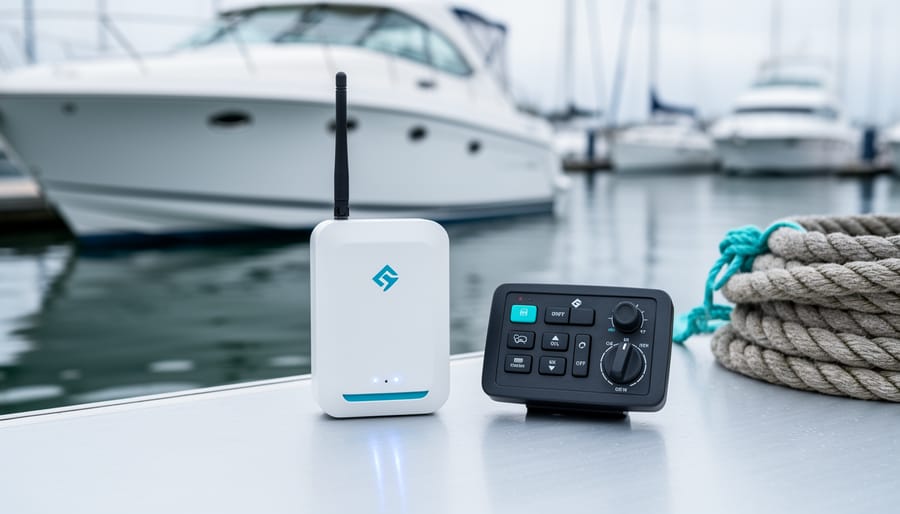
- Remote monitoring setup including boat monitoring systems for real-time vessel status
- Ongoing maintenance contracts with scheduled inspections and proactive system checks
System diagnostics represent a critical service for troubleshooting intermittent issues, identifying integration conflicts, and preventing failures before they occur. Certified technicians use specialized diagnostic equipment to analyze data networks, electrical loads, and communication protocols across integrated systems. This proactive approach catches problems that basic visual inspections miss.
24/7 technical support sets professional providers apart when systems fail at sea or during critical operations. Immediate access to knowledgeable support staff who understand your specific installation can mean the difference between a minor inconvenience and a serious safety issue. Many Fort Lauderdale providers maintain round-the-clock contact for their clients, offering remote troubleshooting and dispatch services when needed.
Preventive maintenance programs schedule regular system health checks, software updates, and calibration services that extend equipment life and maintain warranty coverage. These structured programs document system performance over time, creating a service history that proves valuable for insurance purposes and resale.
Why Fort Lauderdale for Marine Electronics
Fort Lauderdale earned its “Yachting Capital of the World” designation through decades of concentrated maritime expertise, making it an ideal location for sophisticated marine electronics services. The city’s deep-rooted connection to both commercial shipping and recreational boating has created an ecosystem where technical knowledge, supplier networks, and industry innovation converge.
The geographical advantage alone sets Fort Lauderdale apart. Positioned along the Intracoastal Waterway with direct Atlantic access, the area serves as a natural hub for vessels moving between the Caribbean, Gulf Coast, and northeastern seaboard. This strategic location means marine electronics providers here regularly work on diverse vessel types, from offshore fishing boats and mega yachts to commercial workboats, developing broad technical competence that translates to better service for all clients.
Fort Lauderdale’s concentration of marine industry suppliers gives local electronics professionals immediate access to cutting-edge technology and replacement components. When a project requires specialized radar equipment, advanced satellite communication systems, or proprietary integration components, certified technicians can source these items quickly rather than waiting on distant distributors. This supply chain efficiency reduces project timelines and ensures installations use current, properly supported technology.
The established network of maritime professionals in the area creates another layer of value. Marine electronics specialists work alongside naval architects, surveyors, and boatyard professionals, sharing technical insights and coordinating complex refits seamlessly. This collaborative environment means a certified provider like Seamless Marine Electronics Solutions can assemble specialized expertise for projects requiring electrical engineering, mechanical integration, or custom fabrication. The depth of available maritime talent in Fort Lauderdale directly translates to more sophisticated, better-executed electronics installations for vessel owners and operators.
Selecting a Marine Electronics Provider in Fort Lauderdale
Selecting the right marine electronics provider in Fort Lauderdale requires evaluating technical credentials alongside practical experience. Start by verifying certifications through NMEA or ABYC registries rather than relying on claims alone. Ask prospective providers about their experience with your specific vessel type, whether it’s a sportfishing yacht, cruiser, or commercial vessel, since installation approaches vary significantly by configuration.
Integration capability distinguishes competent installers from exceptional ones. A qualified provider should explain how new systems will communicate with existing equipment, address potential compatibility issues, and ensure redundant systems like an emergency tiller remain functional alongside upgraded electronics. Request examples of similar integration projects they’ve completed, including the specific brands and systems involved.
Warranty coverage reveals a provider’s confidence in their work. Look for companies offering comprehensive warranties that cover both equipment and installation labor, typically ranging from one to three years. Post-installation support matters equally. Determine whether the company provides troubleshooting assistance, system training, and ongoing maintenance services. Ask about response times for urgent issues and whether support includes remote diagnostics or requires on-site visits.
How do I verify a technician’s certifications?
Check the NMEA or ABYC online directories using the company name or technician’s credentials. Legitimate certifications include registration numbers that you can verify independently.
What should a marine electronics quote include?
A detailed quote should itemize equipment costs, labor hours, integration requirements, testing procedures, and warranty terms. It should also address any vessel-specific modifications needed for proper installation.
How long does a typical installation take?
Simple single-system installations may require one to two days, while comprehensive refits with multiple integrated systems often take one to three weeks depending on vessel size and complexity.
When should I upgrade my marine electronics?
Consider upgrades when systems are seven to ten years old, when you’re expanding vessel capabilities, or when newer technology offers significant safety or operational advantages for your specific use case.
Project management approach indicates professionalism. A qualified provider schedules installations to minimize vessel downtime, coordinates with other trades when needed, and provides realistic timelines with contingency planning. They should document the system architecture, deliver operation manuals, and train your crew on new equipment before considering the project complete.
Fort Lauderdale’s concentration of certified marine electronics professionals offers boat owners and maritime businesses a decisive advantage: access to expertise that ensures systems work together flawlessly rather than simply function independently. The difference between a competent installation and an integrated solution lies in the technical knowledge, design capability, and commitment to excellence that certification represents.
Seamless Marine Electronics Solutions brings this comprehensive approach to every project. With certified professionals skilled in mechanics, design, and engineering, the company handles everything from navigation system integration to complex electrical refits with equal proficiency. Their expertise in solar power systems and battery management demonstrates the breadth of capability needed for modern marine electronics installations.
Choosing certified professionals protects your investment. Properly integrated systems deliver better performance, simpler operation, and fewer failures. They adapt to your vessel’s specific requirements rather than forcing generic solutions. For business operations requiring reliability or leisure vessels demanding sophisticated technology, working with Fort Lauderdale’s certified marine electronics experts transforms good equipment into exceptional systems that enhance every aspect of the maritime experience.