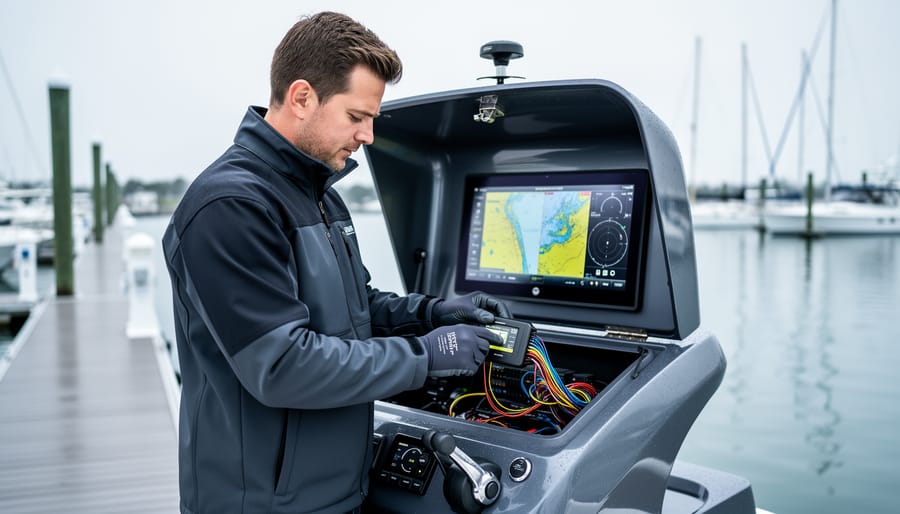

A boat monitoring system is an integrated suite of wireless sensors, control units, and interfaces that tracks critical vessel parameters in real time and alerts owners or crew to anomalies, malfunctions, or security breaches, whether on board or remotely via smartphone or web portal.
These systems have become a modern standard for vessel safety and operational excellence in 2026 because they address a fundamental challenge: boats are complex assets that sit unattended for long periods, vulnerable to bilge pump failure, battery drain, intrusion, and environmental damage. Traditional manual checks leave gaps measured in days or weeks. Wireless monitoring closes those gaps, delivering minute-by-minute data on battery voltage, bilge water level, cabin temperature, GPS position, shore power status, and dozens of other parameters. The result is early warning that can prevent a sinking, a dead battery, or a stolen outboard.
For marine engineers and commercial operators, integration across sensor types and communication protocols matters. A well-designed system consolidates NMEA 2000 instrument data, cellular or satellite telemetry, and cloud-based analytics into a single dashboard, reducing the cognitive load and eliminating the need to juggle multiple apps or legacy displays. For recreational owners, the value proposition is simpler: peace of mind and the ability to respond before a minor issue becomes catastrophic.
This article walks through how wireless boat monitoring systems function, what components they comprise, the main system architectures available, and the practical applications that justify the investment for vessels ranging from trailerable runabouts to offshore commercial fleets.
What Boat Monitoring Systems Mean for Vessel Owners
A boat monitoring system is an integrated network of electronic sensors, wireless communication modules, and software platforms working together to observe your vessel’s critical parameters around the clock. These systems track conditions that directly impact safety and longevity, bilge water accumulation, battery charge state, cabin temperature, unauthorized entry, precise GPS coordinates, and dozens of other data points depending on configuration. When any parameter strays outside normal ranges, the system immediately alerts you via smartphone notification, email, or text message, regardless of your physical distance from the dock.
This represents a fundamental departure from the traditional approach of periodic manual inspections. Instead of walking the dock every few days to check bilge pumps, battery voltage, and cabin conditions, vessel owners gain persistent awareness delivered through a single dashboard interface. A slow bilge leak that might go unnoticed for a week between visits now triggers an alert within minutes of detection. A failing battery charger announces itself before the vessel’s house bank drains completely. An unexpected drop in cabin temperature signals a malfunctioning heater before frozen plumbing causes structural damage.
The practical implications extend across safety, maintenance economics, and asset protection. Early detection of problems, water intrusion, electrical faults, temperature extremes, allows intervention before minor issues escalate into insurance claims or catastrophic failures. Continuous monitoring reduces the frequency of physical inspections without sacrificing oversight, particularly valuable for vessels in remote slips or off-season storage. For commercial operators managing multiple craft, centralized monitoring platforms consolidate fleet health into actionable intelligence that informs maintenance scheduling, regulatory compliance, and operational readiness.
How Boat Monitoring Systems Work
At their core, boat monitoring systems function as distributed networks of specialized sensors that feed data through a central processing unit to your mobile device or computer. Each sensor acts as a dedicated observer, continuously measuring a specific parameter, a float switch tracks rising bilge water, a shunt monitors battery voltage and current draw, a thermistor reads engine room temperature, an accelerometer detects unauthorized motion. These discrete measurements flow to a control hub, typically a microprocessor-based gateway installed in a protected location aboard the vessel.
The hub performs several critical tasks simultaneously. It polls each connected sensor at defined intervals, every few seconds for high-priority inputs like bilge levels, less frequently for slow-changing values like ambient temperature. The processor validates incoming data against expected ranges, filtering out electrical noise and sensor drift that could trigger false alarms. When readings fall outside programmed thresholds, the system generates alert conditions and timestamps the event for your review.
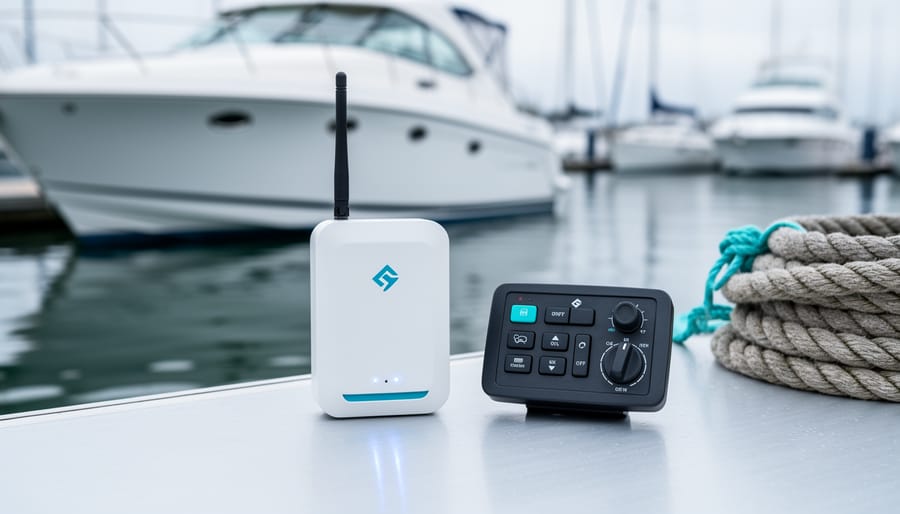
Wireless communication modules bridge the gap between your boat and wherever you happen to be. Cellular gateways transmit data packets over 4G or 5G networks when the vessel sits within coverage areas, ideal for marina berths and coastal cruising grounds. Satellite transceivers take over beyond cellular reach, relaying compressed status reports through Iridium or Globalstar constellations at scheduled intervals to manage bandwidth costs. Shorter-range Wi-Fi and Bluetooth connections serve local access when you are aboard or dockside, enabling configuration changes and real-time diagnostics without consuming cellular data.
Cloud servers receive these transmissions, store historical trends, and push notifications to your smartphone through dedicated apps. The software layer translates raw sensor voltages into meaningful information, 14.2 volts becomes “battery fully charged,” 68 degrees Fahrenheit shows as “engine room normal.” Dashboards present current status at a glance while graphs reveal patterns over days or weeks, helping you distinguish a slow battery drain from a sudden failure.
Effective marine electronics integration ensures these components work as a cohesive system rather than a collection of independent devices. NMEA 2000 networks allow monitoring hubs to share data with chartplotters and multifunction displays, consolidating alerts on screens you already reference. Power management proves equally vital: systems draw from house battery banks with voltage regulators protecting sensitive electronics, and many incorporate solar panel inputs or low-power sleep modes to sustain operation during extended periods away from shore power.
Core Components of a Monitoring System
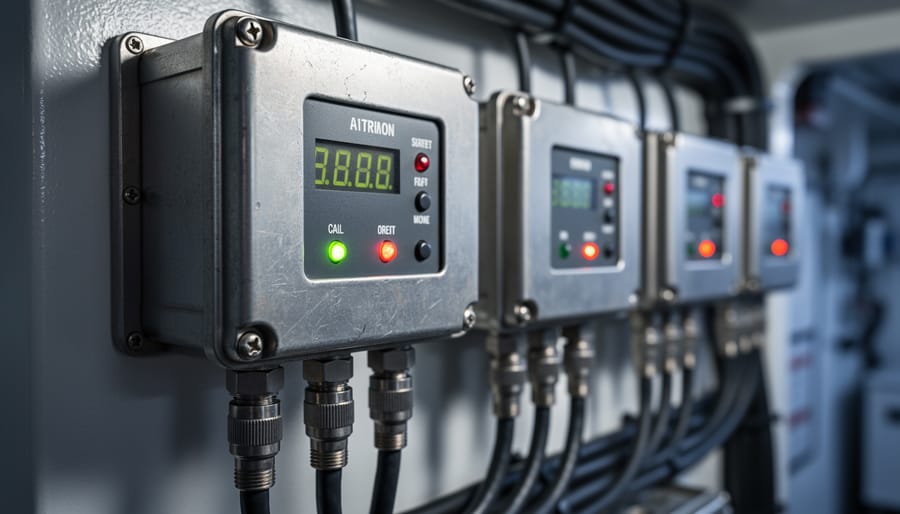
A complete boat monitoring solution layers multiple technologies into a unified system. Understanding each component helps vessel owners make informed decisions about capabilities and installation requirements.
Sensors: The System’s Frontline
Sensors convert physical conditions into electrical signals the system can process. Bilge sensors use float switches or ultrasonic transducers to detect water accumulation, triggering alerts before minor seepage becomes a sinking emergency. Temperature probes monitor engine rooms, refrigeration units, and living spaces, safeguarding against overheating or freezing. Battery monitors track voltage, current draw, and state of charge across all battery banks, starter, house, and auxiliary systems, preventing the dead-battery scenario that strands cruisers in remote anchorages.
GPS trackers provide continuous position data, enabling geofencing alerts when a vessel drifts outside a defined perimeter. Door and hatch sensors use magnetic reed switches to detect unauthorized entry, a critical theft deterrent for unattended boats. Fuel sensors measure tank levels and consumption rates, while advanced engine diagnostic interfaces tap into NMEA 2000 or J1939 networks to pull RPM, coolant temperature, oil pressure, and fault codes directly from the powerplant’s electronic control unit.
Communication Modules and Control Units
Cellular gateways form the backbone of most modern systems, transmitting sensor data over 4G or 5G networks to cloud servers. For vessels operating beyond cellular range, offshore passages, remote cruising grounds, satellite transceivers using Iridium or Globalstar networks maintain connectivity, albeit at higher subscription costs and lower data throughput. Wi-Fi and Bluetooth Low Energy handle short-range communication between sensors and a central hub when the boat is docked or within a marina network.
The control unit, often a marine-hardened microcontroller or edge computing device, aggregates data from distributed sensors, applies logic rules (such as alert thresholds), and manages communication timing to conserve power. This central hub interfaces with existing marine electronics via NMEA 0183 or NMEA 2000 protocols, allowing the monitoring system to integrate with chartplotters, autopilots, and multifunction displays rather than operating as an isolated network.
- Bilge Sensor
- A device that detects water accumulation in the bilge using float switches or ultrasonic measurement, providing early warning of leaks or hull breaches before they escalate.
- Battery Monitor
- An instrument that tracks voltage, current, and state of charge across battery banks, preventing failures and optimizing charging cycles.
- Cellular Gateway
- A communication module that transmits sensor data over 4G or 5G networks to remote servers, enabling real-time alerts and dashboard access from anywhere with cellular coverage.
- GPS Tracker
- A positioning device that logs vessel location continuously, supporting geofencing alerts and providing location history for navigation or theft recovery.
- Cloud Platform
- A remote server infrastructure that receives, stores, and processes monitoring data, making it accessible through web dashboards and mobile applications.
- Push Notification Engine
- Software that evaluates sensor data against preset thresholds and triggers instant alerts, via text, email, or app notifications, when conditions warrant owner attention.
Power Architecture
Monitoring systems run continuously, demanding reliable power. Most draw from the vessel’s house battery bank, with current consumption ranging from a few milliamperes for sleep-mode operation to several hundred milliamperes during active data transmission. Shore power integration allows the system to operate without draining batteries when docked. Solar panel integration, paired with charge controllers, sustains monitoring during extended off-grid periods. Professional installers size wire gauges appropriately, install inline fuses, and configure low-voltage disconnect thresholds to prevent the monitoring system from depleting batteries needed for critical bilge pumps or emergency lighting.
Software Layer: Data to Insight
The software layer transforms raw sensor readings into actionable intelligence. Mobile apps present live dashboards showing current conditions, historical trends, and battery runtime projections. Cloud platforms archive data for long-term analysis, revealing patterns like gradual battery degradation or recurring temperature spikes that signal impending equipment failure. Notification engines apply user-defined rules, alert if bilge water exceeds two inches, if battery voltage drops below 12.2V, if GPS position moves more than 100 meters, and push messages instantly to smartphones, ensuring owners respond before minor issues cascade.
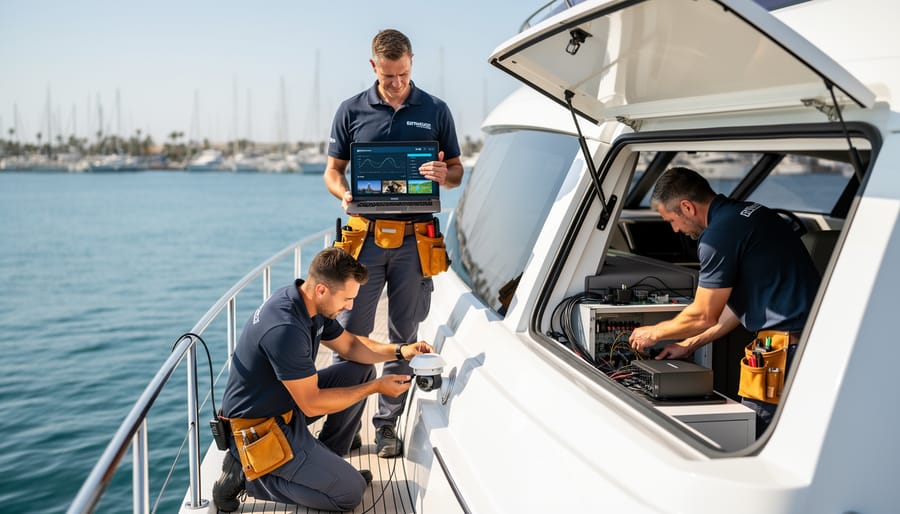
Professional installation ensures sensors mount where they measure accurately, not in dead zones or false-trigger locations. Certified technicians route cabling to avoid chafe and electromagnetic interference, calibrate sensors to vessel-specific baselines, and integrate monitoring networks seamlessly with chartplotters and engine displays. The result: a system that delivers reliable intelligence rather than nuisance alerts, and integrates into the broader marine electronics ecosystem as a cohesive whole.
Categories of Wireless Boat Monitoring Technologies
Wireless boat monitoring technologies fall along a spectrum from single-purpose devices to comprehensive vessel management ecosystems. Understanding this range helps owners match system architecture to their operational needs, budget, and the connectivity environment where their vessel operates.
Standalone single-sensor units represent the entry point for many boat owners. These devices monitor one critical parameter, battery voltage, bilge water level, or GPS location, and communicate via cellular networks or satellite. A bilge alarm that sends SMS alerts when water exceeds a threshold is a typical example. Standalone units install quickly, require minimal integration, and suit vessels where owners want to address a specific risk without overhauling existing electronics. Their limitation is fragmentation: monitoring multiple conditions means installing multiple devices, each with its own power draw, communication plan, and notification interface.
Modular multi-sensor platforms consolidate several inputs into a single hub with unified wireless reporting. These systems accept inputs from bilge sensors, temperature probes, battery monitors, door contacts, and motion detectors, then transmit aggregated data through one cellular or satellite module. The modular approach scales with vessel complexity, add sensors as needs evolve without replacing the central hub. Most platforms offer mobile apps that display all readings in one dashboard and allow customizable alerts. The architecture balances flexibility with simplicity, making it a popular choice for mid-sized recreational vessels and light commercial fleets.
Fully integrated marine electronics ecosystems embed monitoring within broader navigation and control networks. Systems like Garmin’s marine suite or Raymarine’s SeaTalkng infrastructure incorporate monitoring sensors alongside chartplotters, radar, autopilot, and engine diagnostics, all communicating over NMEA 2000 or proprietary backbones. Data flows to multifunction displays at the helm and to shore-based apps via cellular or Wi-Fi gateways. Integration eliminates redundant hardware, centralizes power management, and enables cross-system logic, automatically triggering bilge pumps when sensors detect water, or adjusting HVAC based on cabin temperature readings. These ecosystems demand professional design and installation to ensure protocol compatibility and reliable data routing.
Hybrid systems bridge older instruments with modern wireless connectivity. Retrofit solutions intercept analog or digital signals from existing gauges, fuel level senders, engine tachometers, depth sounders, and digitize them for transmission alongside new wireless sensors. This category suits vessels with substantial legacy electronics investment where replacing functional equipment is impractical. Hybrid platforms extend the operational life of existing instruments while adding remote monitoring capability, though they introduce complexity in signal conversion and calibration.
The communication protocol determines where a system remains effective:
- Standalone cellular trackers for nearshore and coastal monitoring where 4G or 5G coverage is reliable.
- Modular sensor networks leveraging cellular or Wi-Fi for vessels in marina slips and protected waters.
- Integrated marine electronics suites using cellular gateways for comprehensive onboard and remote access within coastal range.
- Satellite-enabled offshore systems employing Iridium or Globalstar transceivers for blue-water cruising and commercial operations beyond cellular reach.
- Hybrid retrofit solutions often defaulting to cellular for cost efficiency, with satellite modules available as add-ons for extended range.
Cellular dominates in near-coastal applications due to bandwidth, speed, and low incremental data costs. Wi-Fi suits dockside use and local diagnostics during service intervals. Bluetooth LE connects portable sensors to hub devices within the vessel, conserving power. Satellite becomes essential beyond roughly twenty miles offshore, where cellular signals fade, but introduces higher equipment costs and recurring airtime fees. Some advanced systems employ intelligent protocol switching, defaulting to Wi-Fi at the dock, cellular underway in coastal waters, and satellite when offshore, to optimize connectivity and cost across changing operational zones.
Real-World Applications and Use Cases
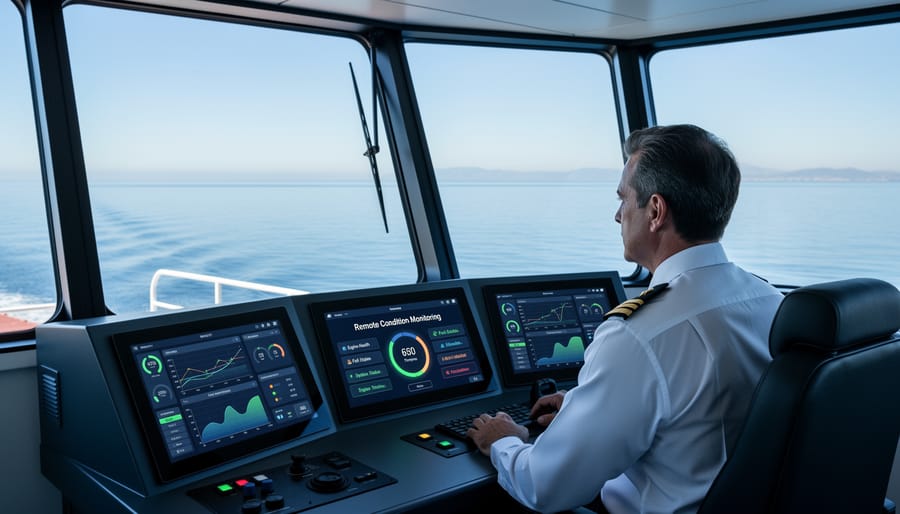
Recreational boaters rely on monitoring systems to protect investments during extended periods away from the dock. A bilge sensor paired with cellular alerts catches slow leaks before they become catastrophes, while battery voltage tracking prevents dead cells from stranding a vessel mid-season. GPS-enabled theft deterrence notifies owners the moment an unauthorized engine start or unexpected movement occurs, often recovering boats within hours of a theft attempt. Climate monitoring verifies that heating or ventilation maintains safe temperatures during winter storage, preventing condensation damage to upholstery and electronics. Shore power failure alerts ensure that refrigeration, dehumidifiers, and battery chargers remain operational, avoiding spoiled provisions and discharged house banks.
Commercial operators integrate monitoring into fleet management frameworks that track vessel location, engine hours, fuel consumption, and maintenance intervals across multiple assets. Real-time diagnostics flag engine anomalies before they escalate into costly failures, while automated maintenance scheduling based on actual operating hours replaces guesswork with precision. Regulatory compliance becomes manageable when systems log bilge pump cycles, fuel transfers, and wastewater handling, generating audit-ready reports without manual data collection. For charter fleets, monitoring reduces downtime by alerting shore teams to developing issues while vessels remain in service, enabling proactive intervention rather than reactive repairs.
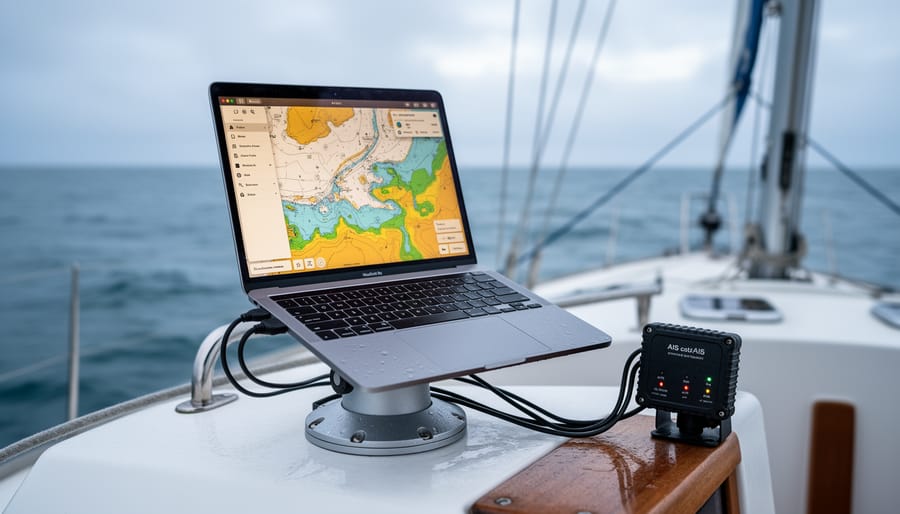
Liveaboards and cruisers depend on continuous systems health monitoring during passages where professional assistance lies days away. A unified monitoring setup integrates bilge, battery, tank levels, and engine parameters into a single dashboard accessible via satellite or cellular link, allowing remote troubleshooting with shore-based technicians. Integration with NMEA 2000 networks pulls data directly from chartplotters, autopilots, and AIS transceivers, correlating navigation events with systems performance. A sudden battery drain might correlate with autopilot behavior logged in the monitoring platform, accelerating diagnosis. Cruisers who install navigation software on laptops often route monitoring data to the same devices, creating a central command interface that displays both passage planning and vessel health side by side.
This integration extends to automated responses: high bilge water can trigger additional pump activation, while low battery voltage can shut down non-essential loads to preserve starting capacity. The holistic vessel management environment that results transforms monitoring from passive observation into active stewardship, whether the boat sits at a slip, operates commercially, or crosses oceans.
Frequently Asked Questions

Do I need an ongoing data plan for my monitoring system?
Most cellular-based systems require a monthly subscription for data transmission, typically ranging from $10 to $30 depending on alert frequency and data volume. Satellite systems cost more but provide coverage in remote waters where cellular networks don’t reach.
Can I retrofit a boat monitoring system to an older vessel?
Yes, modern modular systems install on virtually any boat regardless of age. Professional installers assess existing wiring, identify optimal sensor locations, and integrate wireless modules without extensive hull modifications, making retrofits straightforward for most vessels.
How reliable are wireless alerts, and what about false alarms?
Quality systems use threshold settings and confirmation algorithms to minimize false positives. Professional calibration during installation ensures sensors trigger only for genuine conditions, not normal bilge cycling or temperature fluctuations, achieving reliability above 95% in typical deployments.
What happens if my vessel loses power?
Well-designed monitoring systems include battery backup that maintains sensor operation and communication for 24 to 72 hours during shore power loss. Some platforms send a low-power alert immediately, giving you time to investigate before critical systems go dark.
How secure is my vessel data?
Reputable platforms use encrypted communication protocols and secure cloud storage with authentication requirements. Your location and systems data remain private, accessible only through your login credentials, protecting against unauthorized access or tracking.
Installation complexity varies with system scope. Single-sensor units often work as DIY projects for tech-savvy owners, but multi-sensor platforms benefit significantly from professional integration. Certified installers ensure sensors meet IP67 standards for marine environments, route cabling to avoid chafe, configure NMEA integration with existing electronics, and test alert chains before handing over the system. This expertise reduces installation time, prevents costly mistakes, and delivers a monitoring solution that works reliably from day one.
Beyond the monitoring dashboard, comprehensive vessel protection includes redundant safety measures. Just as you might plan for emergency tiller safety in case of steering failure, a robust monitoring setup pairs with backup systems and clear response protocols. Think of wireless monitoring as the early-warning layer that gives you time to act, whether that means adjusting climate control remotely, dispatching a technician, or activating your steering backup plan if hydraulic pressure drops.
Battery drain concerns are largely resolved by modern low-power electronics. Most systems draw 50 to 200 milliamps in standby mode, equivalent to a small bilge pump float switch. Solar integration offsets this consumption on vessels with charging infrastructure, and careful power budgeting during installation ensures monitoring doesn’t compromise house battery capacity.
Boat monitoring systems represent more than a technological upgrade, they’re a fundamental shift in how vessel owners maintain operational excellence and protect their maritime investments. By integrating sensors, wireless communication, and intelligent software into a unified platform, these systems transform vessel oversight from reactive maintenance to proactive stewardship.
The real value lies not in individual components, but in how they work together. A bilge alarm means little if you’re not aboard to hear it. A battery sensor provides numbers, but integrated monitoring delivers actionable intelligence wherever you are. Modern systems bridge the gap between onboard instruments and remote awareness, creating a continuous link between you and your vessel’s health.
Professional installation ensures this integration functions as designed. Certified marine electronics specialists understand sensor placement, power management, antenna positioning, and network architecture, the technical details that separate reliable performance from intermittent frustration. They tailor systems to your specific vessel, usage patterns, and connectivity requirements, whether you’re coastal cruising or blue-water passage-making.
As marine technology evolves in 2026, wireless monitoring has become a standard expectation for serious vessel owners. Consult qualified professionals to design a solution that matches your operational demands and delivers the peace of mind that comes with knowing exactly what’s happening aboard, wherever you are.