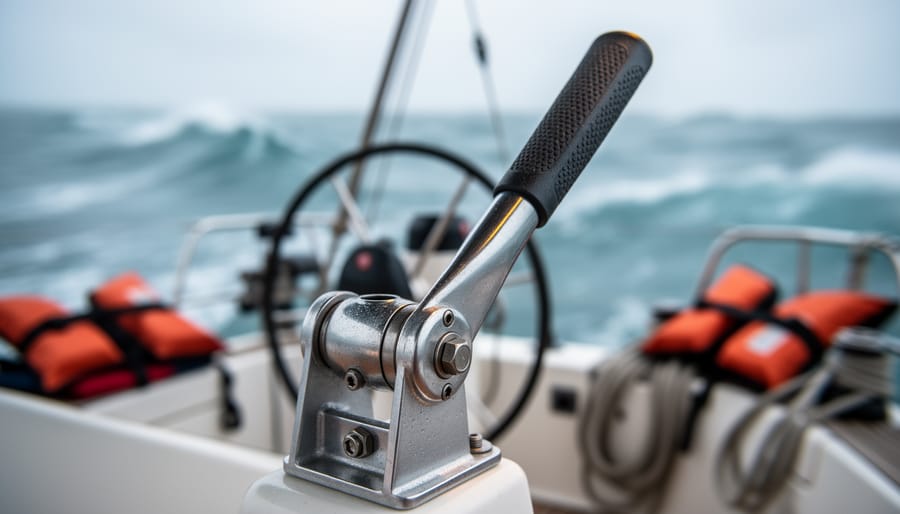

An emergency tiller provides mechanical steering control when your primary helm system fails, converting a potentially catastrophic situation into a manageable one. Most modern sailboats depend on wheel steering systems that can fail due to cable breakage, quadrant damage, or hydraulic system failure, leaving crews with no directional control. Installing the right backup tiller system before you need it separates vessels that can safely return to port from those requiring costly offshore assistance.
The challenge isn’t simply carrying any tiller aboard. Your emergency system must integrate seamlessly with your vessel’s specific steering geometry, deliver adequate mechanical advantage for manual control in rough conditions, and remain accessible when you’re battling weather that disabled your primary helm. Understanding these integration points before you choose an emergency tiller prevents discovering compatibility issues during an actual failure.
This guide evaluates seven proven emergency tiller solutions across different vessel configurations and budgets. Each recommendation addresses specific rudder post designs, steering system architectures, and installation requirements that professional mariners and serious cruisers face. Whether you operate a production cruiser with wheel steering, a performance yacht with hydraulic systems, or a custom vessel requiring fabricated solutions, you’ll find concrete options backed by real-world testing and professional maritime standards.
How We Selected These Emergency Tiller Recommendations
Our recommendations emerged from decades of collective field experience installing and servicing emergency steering systems across hundreds of vessels, combined with rigorous evaluation of real-world performance data. We assessed each option against five critical criteria that determine whether an emergency tiller will actually work when you need it most:
- Rudder post compatibility across square, round, and tapered configurations with secure engagement under load
- Material durability including corrosion resistance, structural integrity, and long-term reliability in marine environments
- Deployment speed and ease of assembly during high-stress emergency conditions with limited crew
- Stowage practicality including dimensional constraints, accessibility, and protection from the elements
- Integration compatibility with hydraulic systems, wheel steering mechanisms, and autopilot disconnection protocols
These criteria reflect the intersection of engineering requirements and operational reality. A beautifully fabricated tiller that takes fifteen minutes to assemble while your vessel pitches in heavy seas serves nobody well. Similarly, an emergency tiller that corrodes after two seasons or can’t maintain secure engagement with your specific rudder post configuration becomes a liability rather than safety equipment.
Our evaluation draws directly on Seamless Marine Electronics Solutions’ installation experience with tiller systems across vessel classes from 30-foot coastal cruisers to 65-foot blue-water passage-makers. We’ve witnessed which designs crews can actually deploy under pressure, which materials endure decades of stowage without degradation, and which configurations integrate seamlessly with modern steering systems versus requiring extensive modification. For detailed guidance on matching these criteria to your specific vessel, consult our comprehensive emergency tiller buying guide before making your selection. Each recommendation that follows passed this multi-dimensional assessment, representing proven solutions rather than theoretical options.
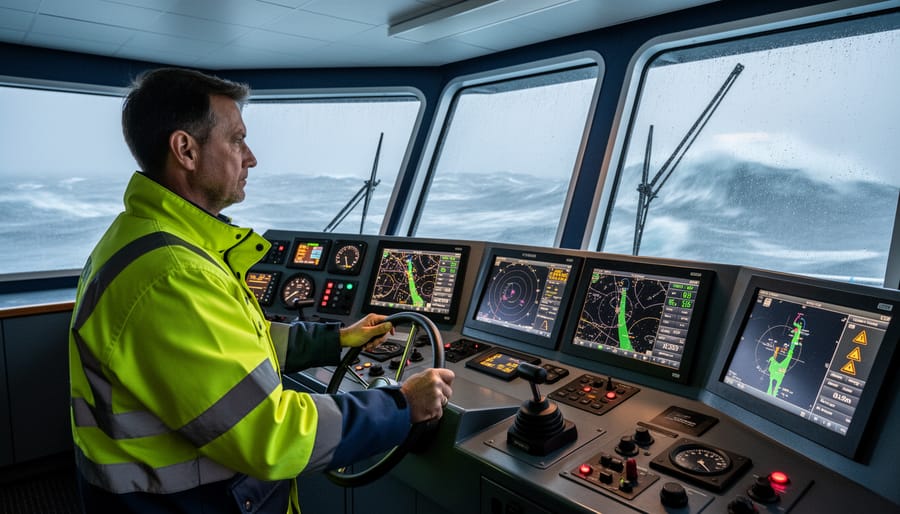
1. Edson Emergency Tiller Kit, Universal Compatibility for Cruising Sailboats
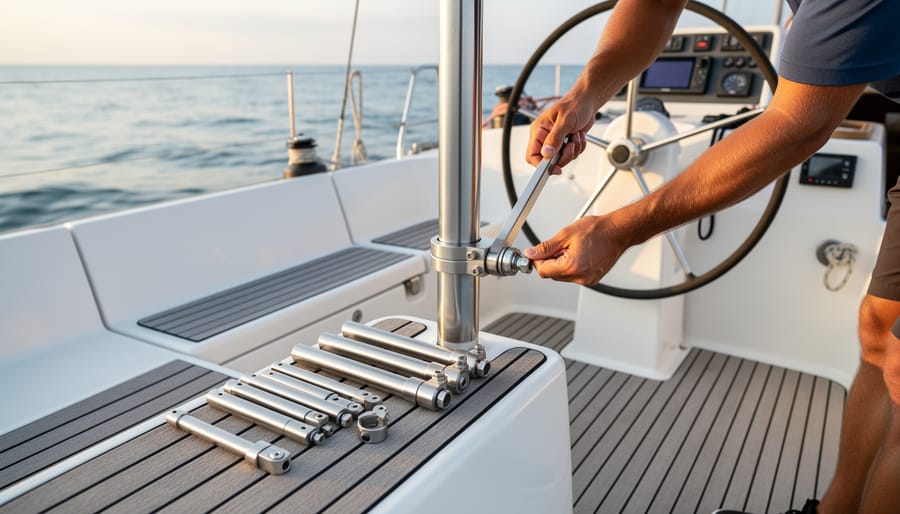
The Edson Emergency Tiller Kit stands as the industry benchmark for modular backup steering solutions, earning its reputation through decades of proven performance on cruising sailboats from 30 to 50 feet. What separates this system from fixed-design alternatives is its adjustable architecture: the kit includes multiple socket sizes and extension components that adapt to square, round, and keyed rudder post configurations without requiring custom machining.
Edson manufactures these kits from Type 316 stainless steel, the marine-grade alloy that resists crevice corrosion in saltwater environments far better than standard 304 stainless. The tiller arm itself features a telescoping design with secure locking pins, allowing you to adjust effective leverage based on sea conditions and rudder load. In moderate weather, you’ll use the shorter configuration for precise control. When heavy seas demand maximum mechanical advantage, the extended position delivers the leverage needed to maintain steerage against weather helm.
Assembly under emergency conditions matters more than elegance in calm harbors. Edson’s socket-and-pin system requires no tools beyond what’s already in the kit. The rudder post socket drops onto your rudderhead, secured by a single through-bolt and locking nut. The tiller arm then inserts into the socket collar with a spring-loaded detent pin that clicks into place. Most experienced sailors complete full deployment in under three minutes, even in rough conditions with the cockpit taking spray.
Blue-water cruisers favor this system because it breaks down into compact components that stow in a dedicated cockpit locker without monopolizing storage space. The modular design also means you can replace individual components if one piece suffers damage or corrosion, rather than sourcing an entirely new custom tiller.
Integration with your existing steering system is straightforward: the emergency tiller bypasses wheel and hydraulic components entirely, providing direct mechanical connection to your rudder post. This independence from compromised systems is exactly what you need when primary steering fails offshore.
2. Whitlock Custom Emergency Tiller, Precision-Engineered for Hydraulic Steering Systems
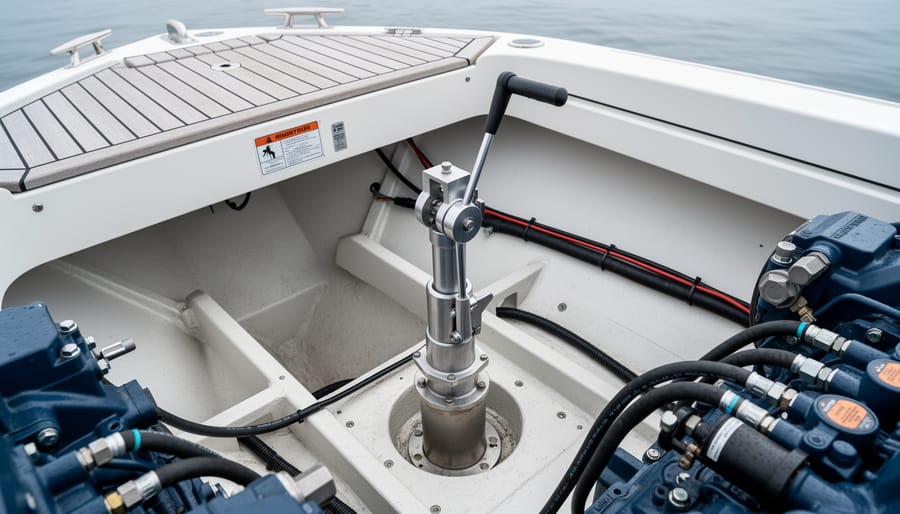
Hydraulic steering systems present unique challenges for emergency tiller deployment, the rudder post often sits buried beneath decks, surrounded by hydraulic rams, fluid lines, and complex linkages. Whitlock tackles this problem head-on with custom-fabricated emergency tillers engineered specifically for vessels running their hydraulic steering components.
Unlike universal kits that assume clear rudder post access, Whitlock’s approach starts with your actual installation. Their engineers analyze your steering quadrant configuration, measure the available working envelope in your lazarette or cockpit sole, and design a tiller that threads through the existing hardware without requiring you to disassemble hydraulic components during an emergency. This matters when you’re dealing with a failed hydraulic pump 200 miles offshore and need steering restored in minutes, not hours.
The fabrication uses marine-grade stainless steel throughout, with particular attention to the coupling mechanism that mates with square or keyed rudder posts. Whitlock machines these interfaces to tolerances that eliminate slop while still allowing rapid engagement under stress. The corrosion resistance extends beyond the base metal, all fasteners, pins, and locking hardware receive appropriate coatings for saltwater immersion.
Integration with Whitlock’s own steering pedestals and quadrants provides a significant advantage. If your vessel already runs Whitlock hydraulic components, their emergency tiller design accounts for the exact geometry of your system. The tiller arm length calculates to deliver workable helm feedback even with the mechanical disadvantage of direct rudder post control, and the handle positioning considers the cramped quarters typical of stern cockpit installations.
For larger cruising vessels in the 45 to 65-foot range, particularly charter operations running extended offshore passages, Whitlock’s custom approach delivers reliability that justifies the higher upfront cost. Charter operators especially value the precise fit, crew changeovers mean different people may need to deploy the tiller, and a system that installs without ambiguity reduces training time and emergency response delays.
Professional installation remains essential. The custom nature of these tillers means your marine technician must verify fitment during commissioning and document the deployment procedure specific to your vessel’s configuration.
3. Jefa Custom Emergency Tiller, High-Load Performance for Heavy Displacement Vessels
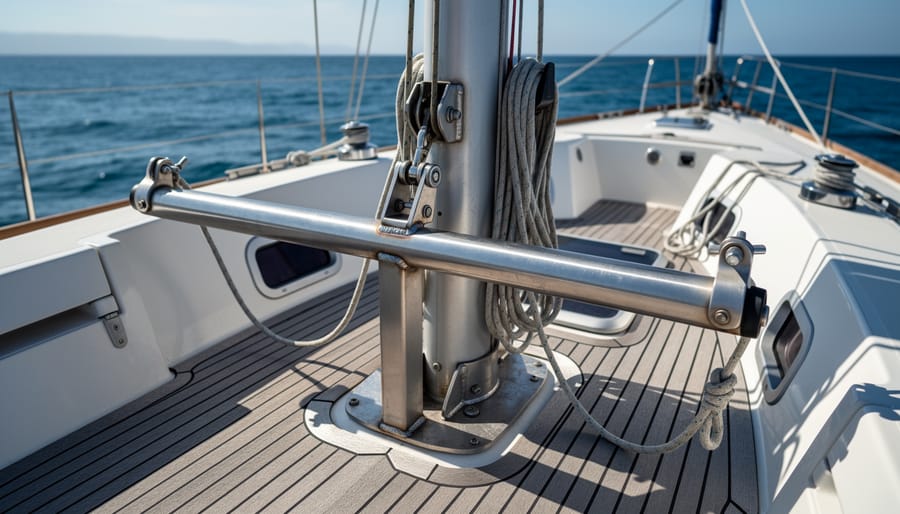
Jefa Steering has built a reputation among blue-water cruisers for emergency tillers engineered to handle the extreme loads generated by heavy displacement vessels in challenging conditions. When you’re steering a 50,000-pound sailboat through 15-foot seas with the hydraulics offline, you need equipment that won’t bend, flex, or fail, and that’s exactly what Jefa’s custom emergency tillers deliver.
The construction methodology sets these tillers apart. Jefa combines marine-grade 6061-T6 aluminum reinforcement with 316 stainless steel components at critical stress points, creating a hybrid structure that balances weight considerations with exceptional load-bearing capacity. The reinforced aluminum sections reduce overall weight for easier deployment while maintaining rigidity, and the stainless steel elements at the rudder post interface and grip areas resist the concentrated forces that can deform lesser materials during emergency maneuvers.
Load ratings matter significantly on passage-making vessels. Jefa emergency tillers are engineered to handle steering loads exceeding 200 foot-pounds of torque, substantially more than what most recreational-grade tillers can manage. This capacity becomes critical when you’re attempting to maintain control in heavy weather without hydraulic assist, where rudder forces can spike dramatically with each wave impact.
Custom fabrication ensures these tillers integrate precisely with Jefa’s own steering systems, matching rudder post dimensions, quadrant clearances, and cockpit geometry specific to your vessel. The engineering process accounts for steering cable routing, pedestal placement, and access constraints that vary widely among heavy displacement designs. Each tiller includes vessel-specific installation documentation and torque specifications.
For offshore cruisers running Jefa steering systems, the factory-custom emergency tiller represents the most reliable backup option, engineered by the same team that designed your primary steering components, with materials and tolerances that match the duty cycle of serious passage-making.
4. NavPod-Compatible Folding Emergency Tiller, Compact Solution for Modern Deck Layouts
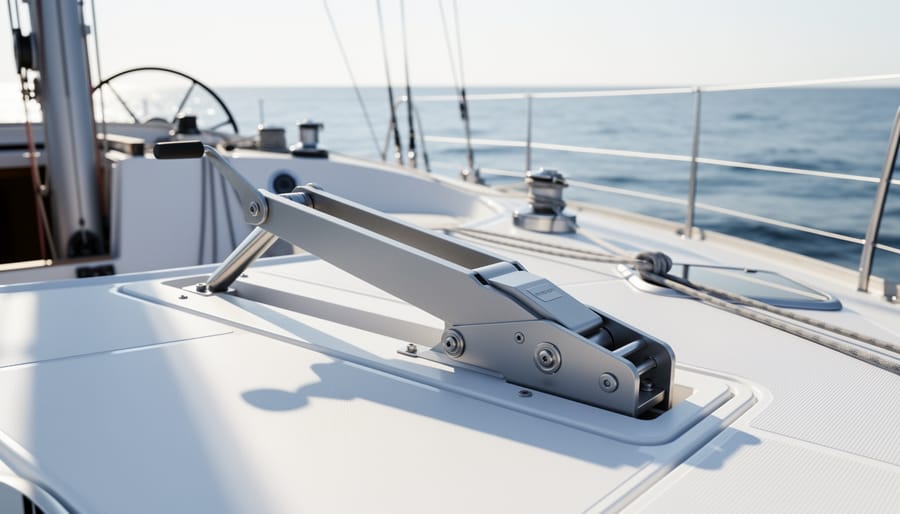
Modern sailboats face a stowage paradox: cockpits are smaller, electronics pedestals dominate the helm area, and dedicated emergency tiller storage often loses out to chartplotters, radar domes, and instrument clusters. The NavPod-compatible folding emergency tiller addresses this reality head-on with a collapsible design engineered for vessels where every cubic inch of deck real estate matters.
Unlike traditional one-piece tillers that require four to six feet of clear storage space, folding emergency tillers break down into compact sections. The typical configuration features a hinged or telescoping shaft that reduces the overall length by sixty to seventy percent. Deployment takes fifteen to thirty seconds, critical when you’re dealing with a failed steering system in challenging conditions. Quality folding designs incorporate positive-locking mechanisms at each joint, eliminating any play or flex once assembled. You need absolute rigidity when you’re steering through weather; a folding tiller shouldn’t feel different from a solid unit once deployed.
The NavPod compatibility factor matters more than many owners realize. Contemporary sailboats built between 2020 and 2026 often have molded composite pedestal guards, integrated GPS antenna mounts, and electronics enclosures positioned directly above or adjacent to the rudder post access point. A folding emergency tiller can thread through these obstacles during deployment without requiring removal of expensive navigation gear or structural modifications to the cockpit sole.
Material selection favors anodized aluminum for the articulating segments, paired with stainless steel fittings at stress points. Expect to pay between four hundred fifty and seven hundred dollars for a properly engineered folding system from established manufacturers, more than a basic solid tiller, but justified by the space savings and deployment speed when every second counts.
5. Custom-Fabricated Emergency Tiller by Marine Machine Shop, Tailored for Unique Rudder Configurations
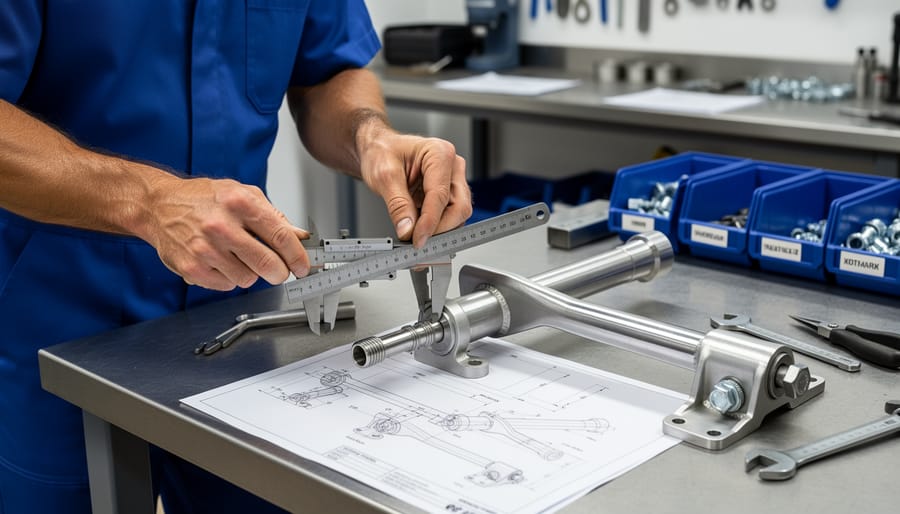
When your sailboat features an unusual rudder post geometry, a vintage steering system, or a high-performance racing configuration, off-the-shelf emergency tillers rarely fit properly or deliver the strength and precision you need. Custom fabrication becomes the only reliable path to a backup steering solution that works when hydraulic or cable systems fail.
Vessels with tapered square rudder posts, elliptical shafts, or non-standard spline configurations demand bespoke engineering. Classic sailboats from the 1960s through 1980s often present unique challenges: rudder post dimensions that don’t match modern standards, limited cockpit access, or steering pedestals that obstruct emergency tiller deployment. Racing boats with carbon fiber rudder posts or ultra-low-profile deck layouts require custom solutions that balance weight savings against structural integrity under heavy loads.
The custom fabrication process starts with a thorough assessment of your rudder post configuration and cockpit geometry. Seamless Marine Electronics Solutions’ engineering team evaluates rudder post access, measures shaft dimensions at multiple points to account for taper, and documents any obstructions that might complicate emergency deployment. Material selection typically centers on marine-grade 316 stainless steel for maximum corrosion resistance and strength, though some applications benefit from reinforced aluminum to reduce weight on performance vessels.
Design considerations extend beyond the rudder post interface itself. Custom tillers must account for autopilot disengagement points, cockpit sole clearances, and integration with existing hydraulic or mechanical steering components. The engineering process includes stress analysis to ensure the tiller won’t bend or fail under load, particularly critical for heavy displacement vessels or those operating in challenging offshore conditions.
A properly engineered custom emergency tiller includes precise socket geometry that eliminates play while allowing quick attachment, adequate lever length for mechanical advantage without excessive cockpit intrusion, and secure stowage provisions that keep the tiller accessible yet protected. When you select the right backup steering through custom fabrication, you gain a safety system engineered specifically for your vessel’s unique configuration rather than compromising with an ill-fitting universal solution.
6. Lewmar Emergency Tiller Assembly, OEM Solution for Factory Steering Systems
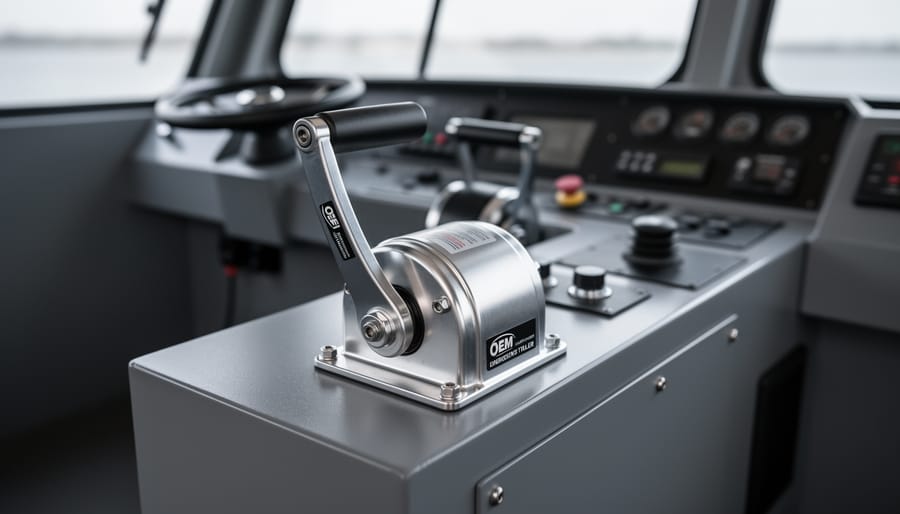
Lewmar’s factory emergency tiller assemblies offer vessel owners a streamlined path to backup steering that eliminates compatibility guesswork. If your sailboat came equipped with Lewmar steering components, whether cable-and-quadrant, rack-and-pinion, or hydraulic systems, the corresponding OEM emergency tiller provides guaranteed fitment to your specific rudder post configuration without custom machining or adapter fabrication.
The primary advantage lies in engineering integration. Lewmar designs emergency tillers alongside their steering systems, ensuring the tiller arm length, rudder post socket dimensions, and securing hardware match factory specifications precisely. This plug-and-play approach reduces installation complexity and potential failure points that can arise from aftermarket adaptations or universal-fit compromises.
For production sailboats built in the past two decades, Lewmar steering systems are ubiquitous across models from 30 to 55 feet. Manufacturers including Beneteau, Jeanneau, and Bavaria commonly specify Lewmar components as standard equipment. Ordering the corresponding emergency tiller through your boat’s dealer or directly from Lewmar guarantees you receive hardware engineered for your exact steering system model and year.
Installation typically requires minimal modification since Lewmar accounts for emergency tiller compatibility during original system design. Most assemblies include detailed instructions with exploded diagrams specific to your steering model, and rudder post access points align with factory locations. The tiller arm itself arrives pre-drilled and finished, ready for immediate deployment without welding or machining.
The trade-off is limited customization. Lewmar emergency tillers follow standard geometries that may not optimize leverage for every sailing condition or helmsman preference. However, for owners prioritizing reliability, known specifications, and warranty coverage, OEM solutions deliver dependable backup steering without engineering uncertainty. Verify your exact Lewmar steering model before ordering to ensure the tiller matches your installed hardware generation.
7. DIY Emergency Tiller Kit with Professional Engineering Review, Cost-Effective for Experienced Owners
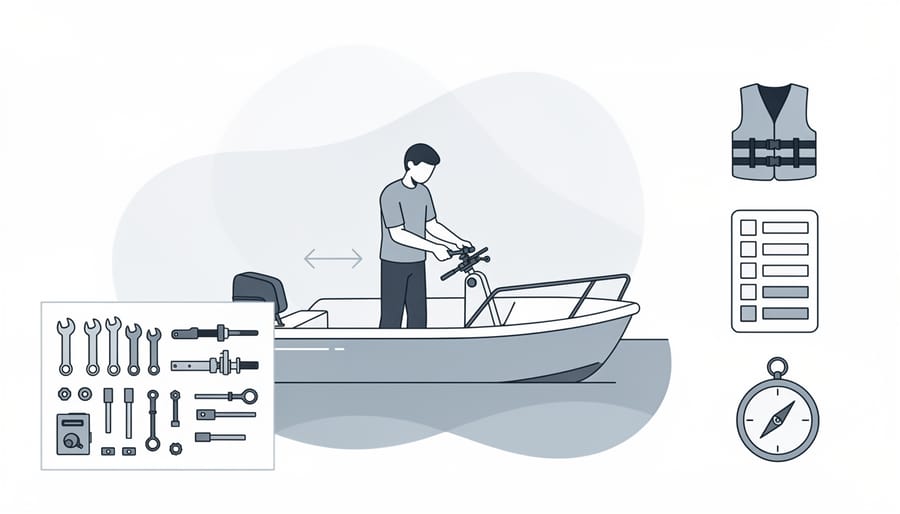
For boat owners with machining skills and engineering knowledge, a DIY emergency tiller offers significant cost savings while maintaining safety standards, provided you follow sound design principles and submit your design for professional review before deployment.
Start by taking precise measurements of your rudder post geometry. Square posts are straightforward, but tapered or round configurations demand careful attention to tolerance calculations. Most DIY builds use 316 stainless steel or 6061-T6 aluminum for the tiller arm, with wall thickness determined by the load calculations for your vessel’s displacement and rudder size. You’ll need to account for the mechanical advantage required to manually overcome typical rudder forces in heavy weather conditions, which typically means a tiller arm length of 36 to 48 inches for vessels in the 30 to 40-foot range.
Material sourcing through marine-grade suppliers ensures you’re working with certified stock rather than hardware store alternatives that may not meet the corrosion resistance or strength requirements. The fitting that engages the rudder post is the most critical component, this is where amateur fabrication often fails. Keyway slots, set screws, and split collar designs each have specific torque requirements and failure modes you must understand.
DIY is appropriate when you have verifiable fabrication experience, proper equipment, and realistic assessment of your capabilities. It becomes non-negotiable to use professional fabrication when your vessel exceeds 40 feet, operates offshore regularly, or has complex steering system integration requirements where failure could prove catastrophic.
Before you ever depend on a DIY tiller, have it reviewed by a qualified marine engineer or surveyor. Seamless Marine Electronics Solutions offers consulting and engineering review services specifically for owner-fabricated safety equipment, providing load testing recommendations and identifying potential failure points you might have overlooked. This professional validation transforms a cost-saving measure into genuinely reliable backup steering.
Installation and Integration Considerations
Installing an emergency tiller requires careful attention to rudder post access, structural integrity, and integration with your vessel’s existing systems. The first step is confirming clear access to the rudder post head, which may require removing inspection plates, cutting access hatches in the cockpit sole, or temporarily relocating gear stowage. On vessels with enclosed steering systems, particularly those with hydraulic or electric wheel steering, this access modification is often the most significant part of the installation process.
Securing hardware must be sized appropriately for the loads an emergency tiller will experience in heavy weather. The rudder post fitting needs precise machining to eliminate any play or slop, as loose tolerances will make steering nearly impossible in rough conditions. Through-bolting or welding attachment points are typically superior to screws for safety-critical applications, and all fasteners must be marine-grade stainless steel or bronze to resist galvanic corrosion.
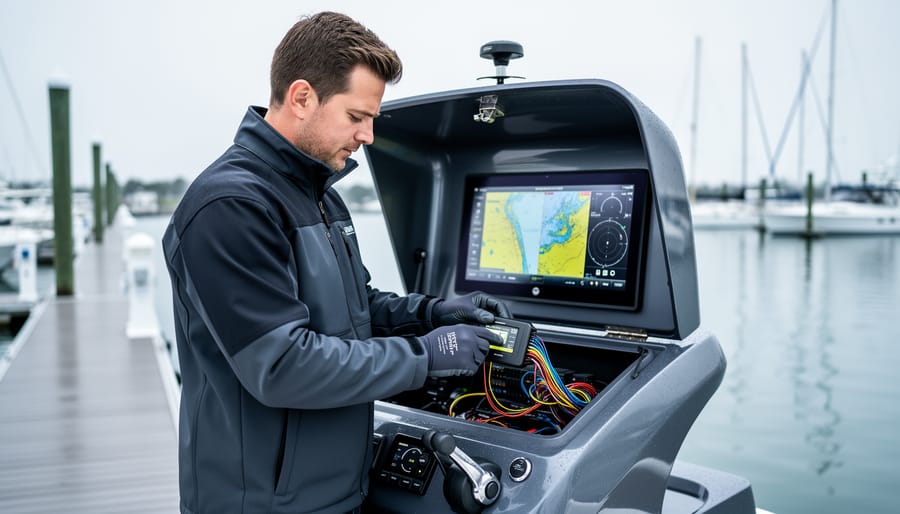
Integration with marine electronics systems is frequently overlooked but critical for safe emergency tiller deployment. Before you can steer manually, you must disconnect or disengage the autopilot to prevent the system from fighting your helm inputs. Some installations benefit from a dedicated emergency tiller mode in the autopilot controller or a clearly marked circuit breaker. When working through these integration requirements, reference a comprehensive emergency tiller checklist with your installer to confirm nothing is missed.
Key installation and integration points to verify include:
- Rudder post access is unobstructed and requires minimal disassembly time
- Tiller attachment hardware eliminates all rotational play
- Autopilot disconnect procedure is documented and tested
- Stowage location is clearly marked and instantly accessible
- All fasteners and fittings are corrosion-resistant marine grade
- Cockpit sole modifications maintain watertight integrity
Stowage location deserves particular consideration. The emergency tiller must be reachable within seconds during a crisis, yet secure enough that it won’t become a projectile in rough seas. Many experienced sailors mount tillers on bulkheads near the companionway or in dedicated cockpit lockers with quick-release securing straps. Avoid stowing the tiller where it requires moving heavy equipment or navigating below decks in conditions when you need it most.
Crew familiarization is the final integration step. Every regular crew member should practice locating, assembling, and deploying the emergency tiller at least once per season while tied to the dock, then again under controlled sailing conditions in calm weather before an actual emergency demands its use.
Testing and Maintenance of Your Emergency Tiller
An emergency tiller that hasn’t been tested is a liability, not a safety system. Deploy your tiller at least once annually under controlled conditions to verify fitment, identify wear, and build crew familiarity with the installation process, many sailors discover compatibility issues only when attempting their first deployment.
Start each season with a visual inspection, checking mounting hardware for corrosion, worn threads, or stress cracks. Stainless steel components can develop crevice corrosion in hidden areas, particularly where dissimilar metals contact rudder post fittings. Remove the tiller from its stowage location, examine pin holes and socket interfaces, and apply marine-grade anti-seize to prevent seizure when you need it most.
Schedule a full deployment drill every six months if you’re cruising actively, or annually for seasonal sailors. This drill should simulate actual emergency conditions: disable the wheel steering, retrieve the tiller from stowage, install it on the rudder post, and steer the vessel under power for at least fifteen minutes. Document each test in your vessel’s maintenance log with date, crew members involved, and any fitment or performance issues encountered.
Watch for elongated pin holes, bent arms, or cracked welds, signs that replacement is necessary rather than repair. Most emergency tillers have an indefinite service life with proper maintenance, but significant mechanical damage compromises structural integrity. If your tiller shows deformation after use or repeated testing, commission a replacement before the next sailing season.
Your Emergency Tiller Is Essential Safety Equipment
When primary steering systems fail offshore, your emergency tiller becomes the only tool standing between controlled navigation and potential disaster. This equipment deserves the same rigorous selection process, professional installation standards, and maintenance commitment you apply to your navigation electronics, life rafts, and EPIRB. Treating an emergency tiller as an afterthought or accepting a poorly-fitted backup compromises vessel safety in conditions where steering failure already places crew and boat at maximum risk.
The emergency tiller recommendations detailed throughout this article span universal kits, manufacturer-specific systems, and custom fabrication because no single solution fits every vessel configuration. Your rudder post geometry, steering system type, cockpit layout, and operating conditions determine which option provides reliable backup steering when hydraulic lines rupture or wheel mechanisms jam. Working with certified marine professionals ensures proper fitment, accessible stowage, and crew familiarity before an emergency demands deployment.
How do I determine which emergency tiller fits my rudder post?
Measure your rudder post configuration including shape (square, round, tapered), dimensions, and accessible length above the deck or through access ports. Cross-reference these specifications with manufacturer compatibility charts or consult a marine surveyor for custom applications.
Are emergency tillers required by maritime regulations?
Requirements vary by vessel class and operating area, but most offshore sailing regulations and insurance policies mandate emergency steering capability. Check your flag state requirements and insurer specifications for compliance standards.
Where should I store my emergency tiller for fastest deployment?
Store the tiller in a dedicated, clearly-marked location near the rudder post access point where crew can reach it quickly without navigating below in rough conditions. Common locations include aft lazarette brackets or cockpit sole compartments with emergency access.
When should I deploy the emergency tiller instead of attempting primary steering repairs?
Deploy immediately if primary steering becomes unresponsive and conditions threaten vessel control. Attempting repairs while losing steerage in traffic, near hazards, or deteriorating weather increases risk; secure steering first, then troubleshoot the primary system once safety is established.
Integration excellence defines professional marine systems, whether you are specifying navigation equipment or selecting backup steering. At Seamless Marine Electronics Solutions, our commitment extends across all vessel safety systems because offshore reliability demands every component receives proper engineering attention, from initial specification through installation and ongoing maintenance protocols.