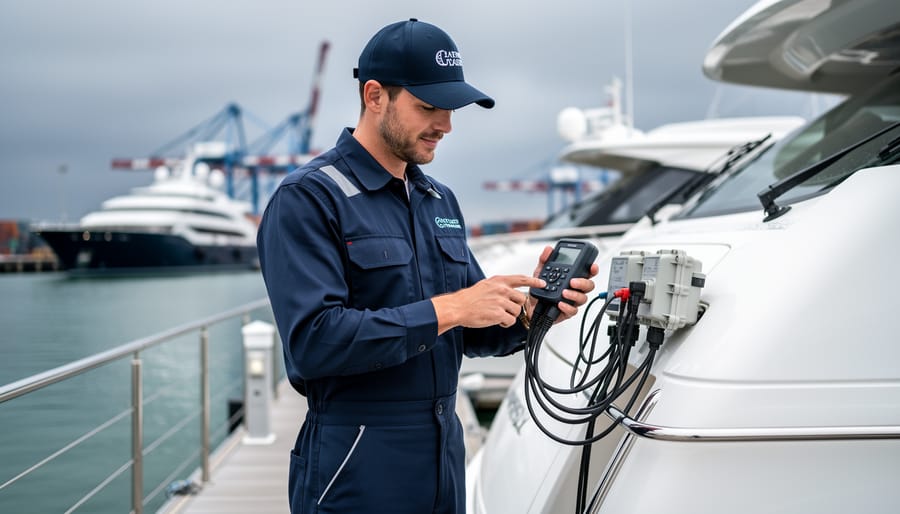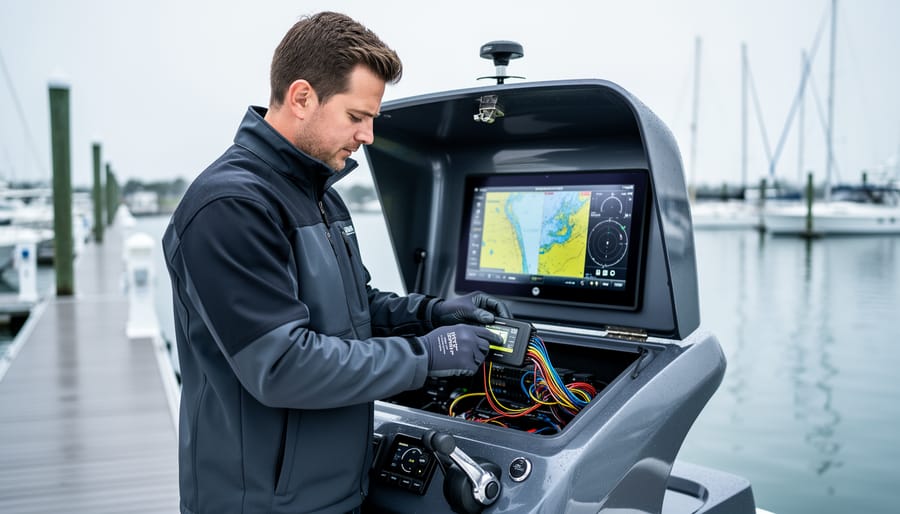
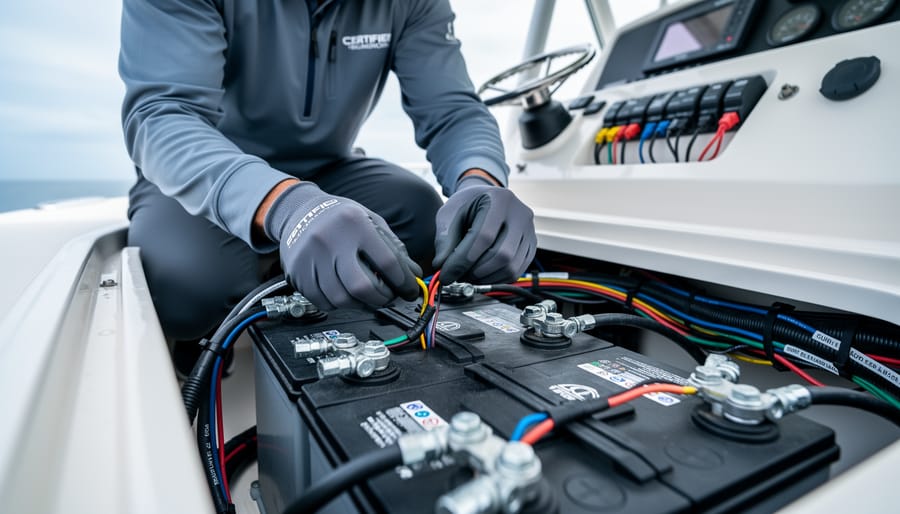

ZS Marine is a marine electronics provider that pairs certified technicians with an integrated approach to installation and service, and that combination is what separates a reliable system from a pile of expensive, poorly communicating boxes. If you’re deciding who should wire your helm, the short answer is this: choose a provider whose certifications are current, whose work treats every component as part of one network, and who can show you how they’ll test the finished system before you take delivery.
Certification matters because marine electronics fail in specific, predictable ways. A chartplotter that drops NMEA 2000 data, a radar that interferes with a VHF, an autopilot fed by a badly grounded heading sensor: each traces back to installation quality, not hardware. Manufacturer and industry credentials show a technician has been trained to prevent those faults.
Integration is the second filter. Radar, sonar, AIS, autopilot, and communications should share data cleanly, so one failure doesn’t blind the whole bridge. Providers committed to excellence plan the network first, then mount the gear.
This article explains what certification actually covers, how integrated services work in practice, and gives you a vetting checklist and FAQ for evaluating any marine electronics provider, ZS Marine included.
What a Certified Marine Electronics Professional Actually Brings Aboard
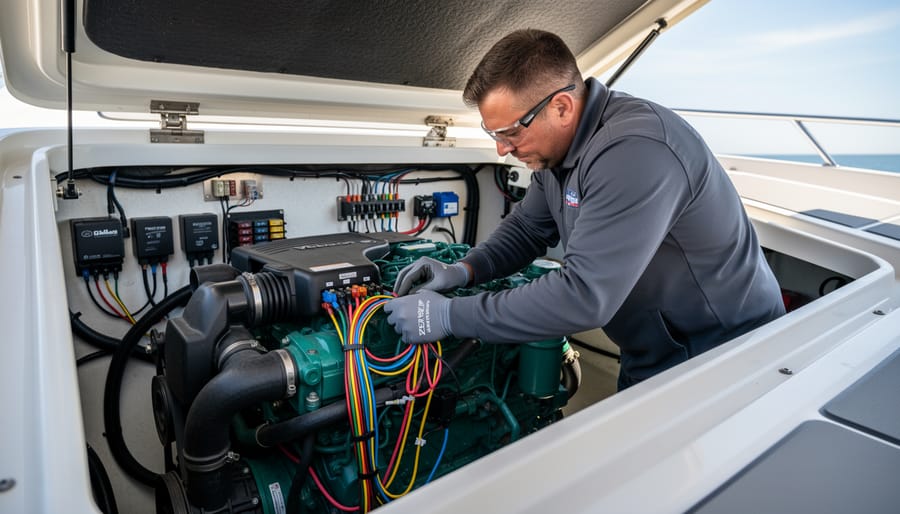
Standards and Training That Set Certified Work Apart
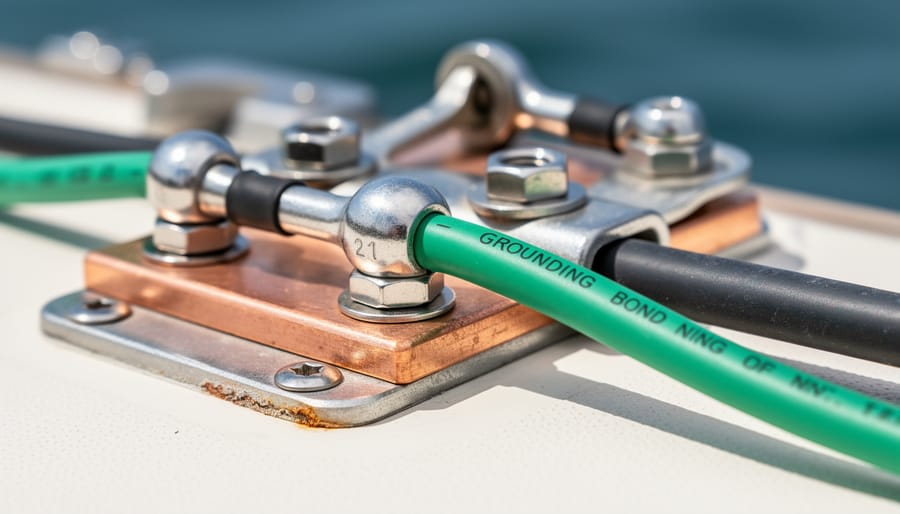
Certification rests on two things: a recognized body of marine standards and structured training that proves a technician can apply them. For electronics work, that means understanding how boats are wired, networked, grounded, and powered, and then demonstrating that knowledge rather than claiming it. Installers who train against a common standard, like the NMEA 2000 networking standard build systems that other professionals can read, service, and expand years later.
Training pathways reinforce this. Courses such as the NMEA 2000 advanced course training go beyond plugging in connectors, covering network design, troubleshooting, and fault isolation.
- NMEA 2000
- A standardized data network that lets marine instruments, autopilots, and sensors share information over a single backbone.
- Galvanic isolation
- A method of separating onboard circuits from shore-side connections to block stray current that accelerates corrosion.
- Bonding system
- A network of conductors that ties metal components together at the same electrical potential to limit corrosion and shock risk.
- Shore power integration
- The safe connection of dockside AC supply to a vessel’s electrical system, including protection devices and correct polarity.
These standards matter well beyond tidy workmanship. Insurers and surveyors often look closely at how electrical work was done, and documented, standards-based installations give owners a stronger footing. More importantly, they reduce the faults that develop quietly over time.
The Cost of Getting Marine Electronics Wrong
A marine electrical system that looks fine at the dock can fail slowly and expensively. Poor grounding and bonding are the classic example. Stray current finds its way through underwater metals, and sacrificial anodes, through-hulls, and even propellers can corrode far faster than their service intervals anticipate. The owner sees the damage at haul-out, long after the faulty connection was made.
Network faults are subtler. A single poorly terminated NMEA 2000 connector or an undersized power tap can cause a chartplotter to drop its depth feed or an autopilot to lose heading data, but only when the boat is pitching in a seaway. Intermittent problems like these are the hardest to diagnose, especially without wiring documentation.
Battery drain is another quiet culprit. Parasitic loads from unfused or improperly switched circuits can leave a bank flat by morning, and repeated deep discharges shorten battery life.
The most serious risk is fire. Undersized conductors, unprotected cable runs, and loose lugs generate heat under load, and aboard a vessel in a sealed engine space or sleeping cabin, that heat becomes a safety problem, not just a repair bill.
Integration Is the Difference Between Gear and a System
Planning Starts With Drafting and Engineering
A vessel’s electronics should be planned on paper before anyone pulls a single cable. Drafting and engineering services turn an owner’s goals, whether that’s offshore passagemaking, charter work, or long stretches at anchor, into a documented wiring and systems plan. That plan maps every circuit, network node, breaker, and cable run, so installers work from a drawing instead of improvising behind a panel.
This is where seamless integration actually begins. When the power budget, data backbone, and equipment locations are resolved up front, conflicts surface on the drawing board, not after the headliner is already back in place.
The difference shows up clearly when you compare the two approaches:
| Factor | Piecemeal Installation | Integrated System Design |
|---|---|---|
| Wiring | Added circuit by circuit, often undocumented | Planned and labeled from a single diagram |
| Troubleshooting | Technicians trace faults by hand | Drawings point straight to the circuit or node |
| Upgrade path | New gear competes for space and power | Capacity and expansion points built in |
| Long-term reliability | Depends on whoever last touched the boat | Consistent standards across the whole vessel |
The records matter long after commissioning. As-built drawings give owners and future technicians a clear reference, cutting diagnostic time and protecting resale value.
Networks, Power, and Data Working Together
A well-designed vessel runs on a single, shared backbone. Instead of wiring each instrument to its own display with a tangle of point-to-point cables, a certified professional lays down one NMEA 2000 trunk with short drop cables to each device. Chartplotters, depth and wind sensors, the autopilot, and engine data all speak over the same network, so any screen can show any data source. When something misbehaves, you trace the fault along one documented path rather than hunting through a dozen unlabeled runs.
That structure also makes expansion simple. Adding a new sensor means plugging into an existing tee rather than pulling fresh cable through bulkheads. The same logic applies to boat monitoring systems which can report tank levels, bilge activity, and battery status from the same backbone while giving you a clear picture of the vessel’s health.
Power planning matters just as much as data. Sensitive electronics need clean, correctly sized supply lines, proper fusing, and separate distribution for high-draw loads like windlasses and inverters. Voltage drop and noise from a poorly routed cable can cause the intermittent glitches owners often blame on faulty gear. A power plan drawn up before installation protects every component downstream and keeps the whole system dependable.
Where Certified Expertise Pays Off Most: Core Marine Services
Solar Power and Energy Management
A solar array only extends your time at anchor if it is sized to the boat you actually have. That starts with a load calculation: every refrigerator, chartplotter, autopilot, and light, multiplied by real hours of use. Undersize the battery bank and you wake up to a dead fridge. Undersize the cabling and voltage drop quietly wastes the power you worked to collect. Charge controllers add another layer, since they must match panel voltage and battery chemistry or they shorten battery life.
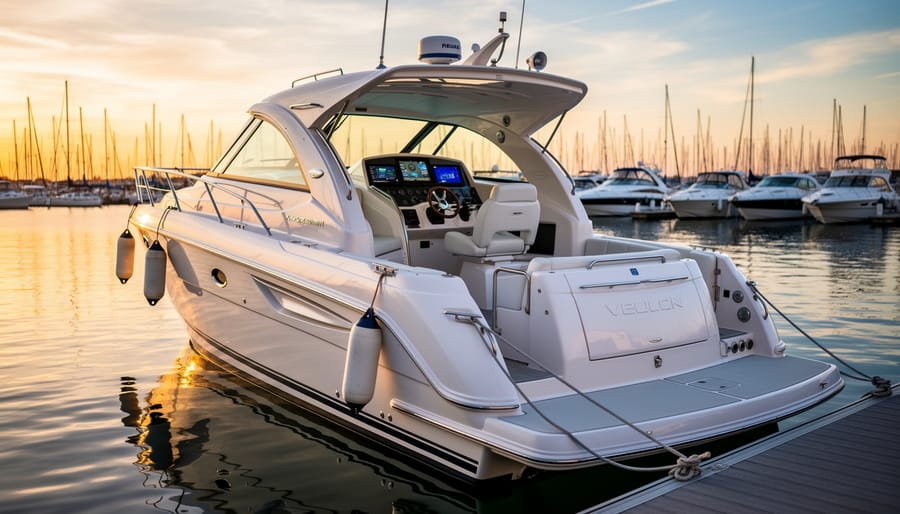
This is why professional design matters. A team doing Marine Electronics Fort Lauderdale work plans the whole power budget before any panel goes on the roof, so the solar system, batteries, and onboard electronics operate as one.
Solar sits within a wider set of services that each solve a specific problem:
- Solar power systems: keep batteries charged at anchor without running the generator.
- Fuel polishing: removes water and contaminants that clog filters and stall engines.
- Custom refits: fit new equipment to the boat’s structure and power budget.
- Electronics installation: gives navigation and communications gear clean power and reliable data connections.
Treated together, these services protect both your equipment and your time on the water.
Fuel Polishing and Systems Reliability
Diesel fuel degrades over time, and a boat that sits for weeks between trips is a perfect incubator for trouble. Water condenses inside tanks, microbial growth feeds at the fuel-water interface, and sediment settles into a sludge that clogs filters and starves injectors. Fuel polishing addresses this by circulating the tank’s contents through filtration and water separation, removing contaminants before they reach the engine or generator.
The real value lies in timing. Polishing after a filter blockage at sea is a rescue; polishing on a schedule is prevention. A certified professional treats it as one line in a wider maintenance plan, alongside filter changes, tank inspections, and fuel testing. That approach also connects to the electrical side: generators feeding your power system are only as dependable as the fuel behind them. Planning fuel quality with the rest of the vessel’s systems keeps small contamination issues from becoming expensive, avoidable failures.
Custom Refits That Respect the Whole Vessel
A refit goes wrong when each trade works in isolation. New electronics get bolted where there happens to be space, the electrician adds loads without checking the battery bank, and the structure is treated as an afterthought. A refit built around the whole vessel avoids this by weighing mechanical, electrical, and design factors together before any work begins.
Start with the structure. Weight placement affects trim, and mounting points must suit the hull and decking. Then look at the power budget: every added radar, pump, or inverter draws from the same system, so charging capacity and cable runs need to be sized for the combined load. Finally, intended use shapes everything. A coastal cruiser, a liveaboard, and a working vessel each need different equipment, redundancy, and layouts.
When these perspectives are coordinated, new equipment fits the boat instead of fighting it.
How to Vet a Marine Electronics Provider Before You Commit
Choosing who works on your boat’s electronics is a decision you can test before you sign anything. Whether you are weighing ZS Marine or a comparable firm, the goal is the same: confirm that the provider’s claims hold up under ordinary questions. Anyone worth hiring will welcome the scrutiny, because it separates dependable work from guesswork. Start with the provider’s certified expertise then work through the rest of the process in order.
- Ask which certifications the technicians hold, then verify them directly with the issuing body rather than relying on a logo or a brochure line.
- Request a written scope that lists every component, the networking approach, and how power and grounding will be handled.
- Ask to see a sample of past documentation, such as wiring diagrams, labeled cable runs, and a commissioning record, so you know what you will be handed at the end.
- Contact two or three references with vessels similar to yours, and ask about communication, schedule discipline, and how problems were handled after launch.
- Review the system plan before work begins. A competent provider can explain why each component sits where it does and how the whole vessel fits together.
- Read the warranty terms closely. Note what is covered, for how long, whether labor is included, and what voids the coverage.
- Confirm the post-installation support plan, including who answers a fault call, how quickly, and whether remote diagnostics are available.
A few practical points make this list work harder. Treat vague answers as information. If a provider cannot name the standards they build to or describe how they document a job, assume you will inherit that gap later. Compare written proposals line by line, since a lower price often reflects omitted items such as cable labeling, testing, or documentation.
Be realistic about what you can confirm from the outside. Online reviews and marketing copy are starting points, not proof. A site visit, a conversation with a technician, and a look at real paperwork tell you far more. The right provider leaves you with a vessel that works, records that make future service simple, and a clear contact when something needs attention.
Questions Boat Owners Ask Before Hiring a Marine Electronics Specialist
Is certification required to install marine electronics?
In most places, no law says you must hire a certified technician for electronics work. The practical pressure comes from elsewhere: insurers, surveyors, and manufacturers’ warranty terms often expect installations to meet recognized standards. Hiring a Certified Marine Electronics Professional gives you documented competence, which matters if you ever file a claim or sell the vessel.
How long does an integrated installation take?
There is no honest one-size answer. Duration depends on vessel size, how much existing wiring can be reused, whether panels or cabinetry need modification, and when equipment arrives. A good specialist will survey the boat first, then give you a scoped schedule with milestones rather than a vague estimate. Be cautious of anyone who commits to a firm timeline without seeing the vessel.
Can my existing equipment be incorporated?
Often, yes. A well-planned system doesn’t force a full replacement. The specialist should assess what you already have, test it, and confirm whether it can share data and power cleanly with new components. Older instruments sometimes need interface modules or are better retired, and a professional will explain which is which and why, rather than defaulting to the most expensive option.
What documentation should I receive?
At a minimum, expect as-built wiring diagrams, a network and device layout, a component list with model and serial numbers, and the settings or configuration notes for key equipment. Warranty paperwork and a clear statement of what was installed and tested belong in the package too. These records speed up future troubleshooting and give the next technician, or the next owner, a clear starting point.
What should I ask before signing anything?
Ask who will actually perform the work, how the installation will be tested, and what support follows once the job is complete. Clear answers to those three questions say a lot about how the provider operates.
Dependable marine electronics come down to two things: who does the work and how the whole system is planned. Certified professionals bring verified knowledge of grounding, networking, and safe installation practice. Integrated design makes sure navigation, power, communications, and monitoring share data and energy cleanly instead of competing for them. Take away either one, and small faults tend to compound into costly ones at the worst possible moment.
The same standard should guide your choice of provider, whether that’s ZS Marine or any other firm you’re weighing. Ask about credentials, request documentation, check references, and understand what support continues after the installation is finished. A provider who welcomes those questions is usually one worth hiring.
Your next step is simple. Write down how you use your vessel, what equipment you already have, and what you want it to do. Then take that list to a certified marine electronics specialist and ask for a plan before any work begins.