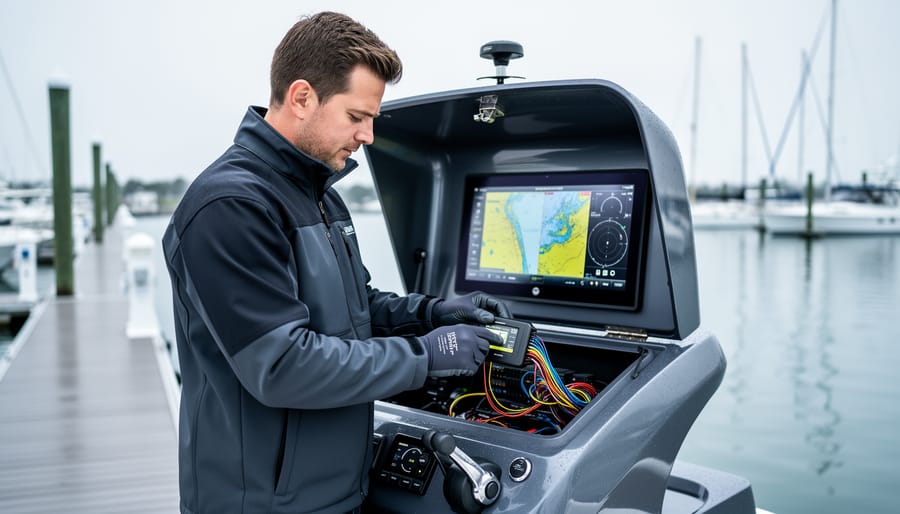

Georges Marine Electronics stands apart in the marine industry through its team of certified professionals who design, install, and service integrated electronics systems for vessels of every size. When you’re evaluating marine electronics providers, certification matters because it signals adherence to NMEA, ABYC, and manufacturer-specific standards that directly affect system reliability, safety, and warranty protection. Georges Marine Electronics brings this certified expertise to every installation, from radar and navigation packages to complete helm redesigns, ensuring that components work together rather than operate as disconnected devices.
The company’s approach centers on integration. Modern vessels require electronics systems that communicate across multiple platforms: chartplotters must share data with autopilots, radar overlays need accurate GPS input, and AIS information should populate on every display. Georges Marine Electronics specializes in creating these unified systems, eliminating the compatibility issues and redundant data entry that plague poorly planned installations. Their certified technicians understand the protocols and wiring standards that make true integration possible, not just the mounting and power-up procedures that anyone with basic skills can handle.
What sets certified marine electronics professionals apart is troubleshooting capability. When a system fails at sea or behaves unpredictably, certification training provides the diagnostic framework to identify root causes quickly. Georges Marine Electronics applies this expertise across their full service portfolio, from pre-installation consultation through commissioning, training, and ongoing maintenance. Whether you’re upgrading a single component or outfitting a new vessel, their certified team ensures that your investment delivers the performance and reliability you expect from modern marine electronics.
The Role of Certified Marine Electronics Professionals
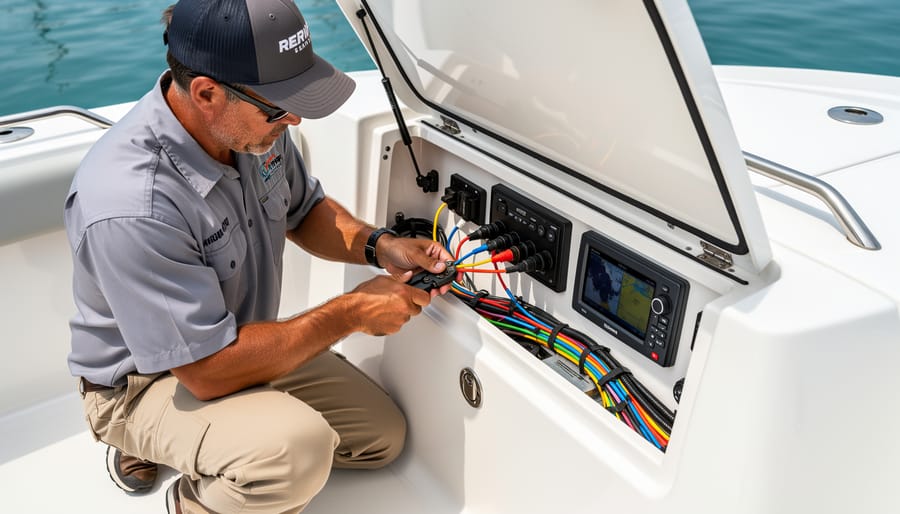
Certification in marine electronics represents formal recognition that a technician has met rigorous industry standards for knowledge, skill, and ongoing education. Organizations like the National Marine Electronics Association (NMEA) and the American Boat & Yacht Council (ABYC) establish these benchmarks, requiring professionals to demonstrate competency across navigation systems, communication equipment, electrical theory, and marine-specific safety protocols. Achieving certification demands both technical training and practical experience, with regular recertification ensuring professionals stay current as technology evolves.
Working with certified technicians delivers tangible advantages beyond technical competence. Marine electronics operate in harsh, salt-laden environments where improper installation can compromise vessel safety, trigger electrical fires, or void manufacturer warranties. Certified professionals understand grounding requirements, waterproofing standards, and electromagnetic interference mitigation, knowledge that prevents catastrophic failures at sea. They also navigate the complex regulatory landscape, ensuring installations comply with U.S. Coast Guard requirements and international maritime conventions.
The integration challenge separates certified professionals from generalists. Modern vessels rely on interconnected systems where navigation data feeds autopilots, AIS transceivers communicate with chart plotters, and radar overlays appear on multifunction displays. A certified technician doesn’t just install individual components; they architect networks using NMEA 2000 and other protocols to enable seamless data exchange. This holistic approach means your depth sounder, GPS, engine monitors, and communication radios function as a unified system rather than isolated devices.
Certification also matters for troubleshooting and long-term support. When electronics malfunction offshore, certified professionals apply systematic diagnostic methods rather than guesswork. They carry manufacturer credentials that grant access to technical resources, firmware updates, and warranty service unavailable to uncertified installers. For vessel owners, this translates to faster repairs, extended equipment lifespan, and confidence that systems will perform when conditions turn challenging.
Georges Marine Electronics: Core Services and Expertise
Advanced Electronics Installation and Integration
Advanced Electronics Installation and Integration
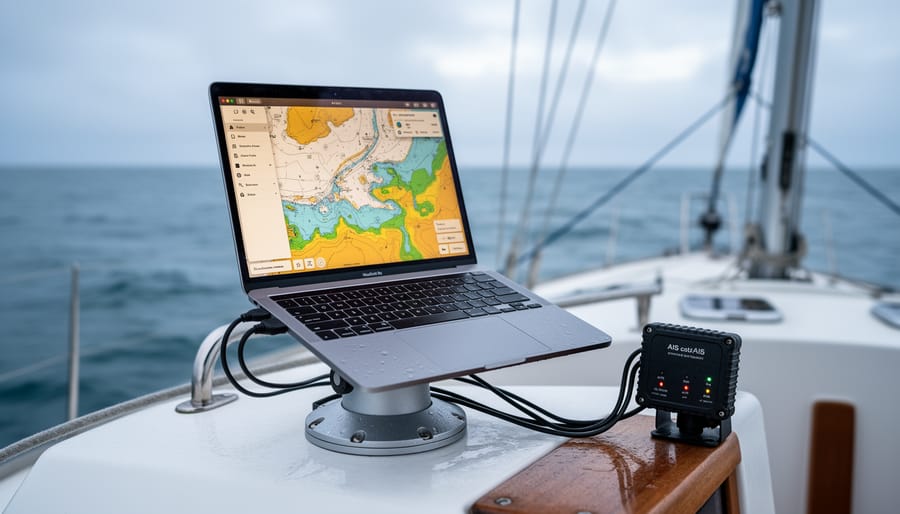
Georges Marine Electronics’ certified professionals specialize in installing and integrating the full spectrum of modern vessel electronics, navigation systems, VHF and SSB communication equipment, radar, sonar, chartplotters, and multifunction displays. The certification’s value shows most clearly here: certified technicians understand not just how individual devices function, but how they must communicate with each other to create a unified electronics ecosystem. A properly integrated system allows a chartplotter to display radar overlay, AIS targets, depth sounder data, and engine telemetry on a single screen, giving operators complete situational awareness without cycling between separate interfaces.
Integration begins with careful system design, selecting compatible hardware, planning NMEA 2000 or Ethernet backbone architecture, and ensuring adequate power distribution. Certified professionals route cables to avoid electromagnetic interference, terminate connections to manufacturer specifications, and configure software settings so data flows correctly between devices. This attention to detail prevents the frustration of incompatible equipment or systems that work in isolation but fail to share critical information.
Whether installing a basic chartplotter with GPS or configuring advanced navigation software networked across multiple displays, Georges Marine Electronics ensures every component functions as part of a coordinated whole, not as a collection of standalone gadgets.
Solar Power and Energy Systems
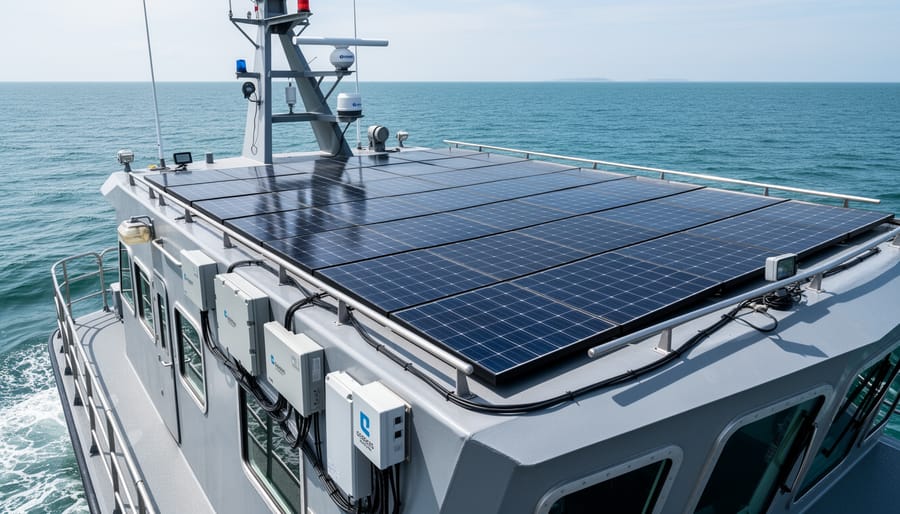
Modern marine solar installations demand more than panels bolted to a deck. Georges Marine Electronics’ certified professionals design complete energy ecosystems that match power generation to consumption patterns, storage capacity to cruising profiles, and charging algorithms to battery chemistry. Each system starts with a load analysis, calculating daily amp-hour requirements from navigation electronics, refrigeration, watermakers, and house systems, then sizes solar arrays and battery banks to meet those needs with adequate reserve.
Battery management separates functional systems from failures at sea. Lithium iron phosphate (LiFePO4) banks offer superior energy density and cycle life compared to traditional lead-acid, but they require precise charge control and temperature monitoring. The company’s installations integrate battery management systems that balance cells, prevent overcharge, and communicate with solar controllers and alternator regulators. For vessels combining solar, shore power, and engine charging, following hybrid solar battery guidelines ensures components work together rather than fighting each other.
Extended cruising and off-grid operation require systems that adapt to variable conditions. Flexible panel layouts maximize capture on curved surfaces, MPPT controllers extract peak wattage across changing sun angles, and monitoring displays show real-time generation versus consumption. When coupled with the vessel’s existing electronics, integrated through the same certified professionals managing navigation and communication systems, solar power becomes a reliable component of the overall maritime infrastructure rather than an isolated accessory.
Fuel Polishing and System Maintenance
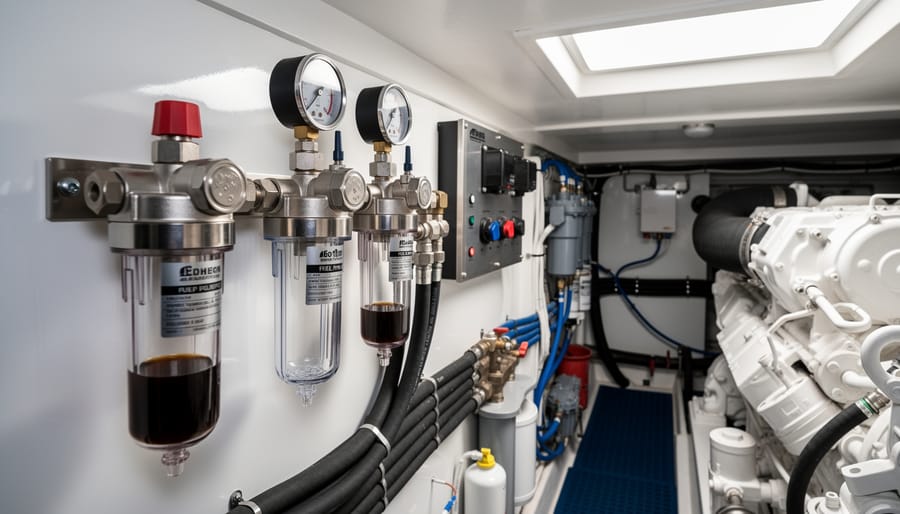
Fuel contamination poses a serious risk to marine engines, particularly for vessels that sit idle between trips or operate in humid environments where water and microbial growth accumulate in tanks. Georges Marine Electronics addresses this threat through professional fuel polishing, a filtration process that removes water, sediment, and biological contaminants before they reach fuel injectors or clog filters. Certified technicians use multi-stage polishing equipment to restore fuel quality, test for contamination levels, and verify system cleanliness.
The company integrates fuel polishing with boat monitoring systems that track fuel quality, filter pressure, and flow rates in real time. This combination of mechanical maintenance and electronic oversight provides early warning of contamination issues, preventing emergency breakdowns far from port. Regular polishing intervals, typically recommended before seasonal use or after extended storage, maintain engine reliability and extend component life. For commercial operators and cruising vessels dependent on consistent propulsion, this service delivers measurable protection against one of the most common yet preventable causes of marine engine failure.
Custom Refits and Engineering Design
Georges Marine Electronics approaches custom refits and engineering design with the same certified expertise that underpins its electronics and systems work. The company’s drafting and engineering team develops detailed plans that account for space constraints, weight distribution, power routing, and system interdependencies, factors critical to successful vessel modifications that many operators overlook until installation begins.
Custom refit projects start with a comprehensive assessment of the vessel’s existing systems and the owner’s operational goals. The team produces technical drawings and 3D models that visualize proposed changes, ensuring all stakeholders understand the scope before work commences. This planning phase identifies potential conflicts, cable runs that interfere with structural members, equipment placements that complicate maintenance access, or power demands that exceed existing capacity, and resolves them on paper rather than during installation.
Execution integrates multiple disciplines. A navigation system upgrade might require new mounting solutions, reinforced backing plates, custom wiring harnesses, and integration with existing autopilot and communication equipment. The certified professionals coordinate these elements, ensuring structural integrity, proper grounding, and clean aesthetics. They fabricate custom panels, mount complex equipment arrays, and route cables through bulkheads while maintaining watertight integrity and meeting marine standards.
Projects range from single-system upgrades to complete bridge redesigns. The engineering design capability ensures each refit delivers not just functional improvements but cohesive results that preserve vessel value and appearance while enhancing operational capability.
Why Integration Sets Georges Marine Electronics Apart
Most marine electronics installations fail not because of inadequate equipment, but because individual systems operate in isolation rather than working together. Georges Marine Electronics built its reputation on solving this fundamental problem. The company’s certified professionals approach every project with a holistic perspective, treating the vessel’s electronics, power systems, and mechanical components as an interconnected ecosystem rather than separate purchases.
This philosophy manifests in practical ways that directly impact reliability and performance. When installing navigation equipment, the team considers how it will draw power, how data flows between chartplotters and autopilots, and how communication systems share information across the network. Seamless integration means that solar charging systems communicate with battery monitors, fuel polishing schedules sync with engine management data, and radar feeds integrate with collision avoidance protocols, all without the compatibility issues and performance gaps that plague piecemeal installations.
The certification credentials Georges Marine Electronics professionals hold aren’t just credentials on a wall. They represent the training and experience required to engineer these complex integrations successfully. Rather than bolting on equipment according to manufacturer instructions, the team designs custom solutions that account for vessel-specific power budgets, mounting constraints, cable routing, and how crew members actually use the systems at sea. This integration-first approach transforms disconnected components into a unified, dependable maritime electronics environment that reduces troubleshooting, minimizes downtime, and delivers the performance modern vessels require.
Choosing a Certified Marine Electronics Provider: What to Look For
Evaluating a marine electronics provider requires more than checking prices, you need assurance that the professionals working on your vessel possess genuine expertise and commitment to quality. Start with verification of certifications. Legitimate marine electronics technicians hold credentials from recognized industry organizations that mandate ongoing education and adherence to technical standards. Ask potential providers to specify their certifications and confirm these through official registries when possible.
Integration experience separates competent installers from true systems specialists. A quality provider demonstrates proven ability to coordinate multiple electronic systems, navigation, communication, radar, power management, so they function as a unified whole rather than disconnected components. Request examples of past integration projects similar to your vessel type and operational requirements. Providers who excel at integration can explain how they’ll resolve compatibility challenges between different manufacturers’ equipment and ensure all systems communicate effectively.
Service range matters significantly for long-term vessel management. A comprehensive provider offering installation, troubleshooting, upgrades, and preventive maintenance becomes your single reliable contact rather than forcing you to coordinate multiple contractors. This streamlines communication and ensures consistent quality across all work. Evaluate whether the provider covers the specific systems critical to your operations, from basic instrumentation to specialized equipment like fuel polishing systems or auxiliary components such as an emergency tiller installation that may require electronic steering integration.
Support availability deserves careful consideration. Determine response times for both routine service and emergency repairs. Providers serving commercial operations should offer expedited service options and clear escalation procedures. Geographic coverage also matters, can they support vessels throughout your cruising range, or only at a home port? Clarify warranty terms, parts availability, and whether the provider maintains relationships with equipment manufacturers for direct technical support when complex issues arise.
Frequently Asked Questions
What does certification mean for marine electronics professionals?
Certification demonstrates that technicians have completed formal training in marine electronics systems and meet industry standards for installation, troubleshooting, and integration. Certified professionals understand safety protocols, manufacturer specifications, and regulatory requirements that govern vessel electronics.
How long does a typical electronics installation or refit project take?
Project duration varies based on scope, simple component installations may take a few hours, while comprehensive refits with integrated navigation, communication, and power systems typically require several days to weeks. Complex custom projects involving engineering design and multiple system coordination take longer but ensure thorough testing and commissioning.
Will new electronics integrate with my existing systems?
Most modern marine electronics support standard communication protocols like NMEA 2000 and NMEA 0183, allowing integration across manufacturers. Certified professionals assess existing equipment, identify compatibility issues, and design solutions that maximize interoperability while preserving functional legacy systems where appropriate.
How often should I service marine electronics and power systems?
Annual inspections catch corrosion, connection degradation, and software updates before they cause failures. Solar arrays and battery banks benefit from semi-annual checks, while fuel polishing intervals depend on storage conditions and fuel turnover, typically every six to twelve months for vessels in regular use.
Working with certified professionals protects your investment. Georges Marine Electronics combines technical credentials with integration expertise, ensuring that navigation, communication, power, and mechanical systems function as a unified whole rather than isolated components. That approach delivers reliability, simplifies troubleshooting, and extends equipment life, benefits that matter whether you’re equipping a commercial vessel or upgrading a cruising yacht.

Leave a Reply