
An emergency tiller provides direct mechanical control of your vessel’s rudder when hydraulic or electric steering systems fail, transforming what could be a catastrophic steering loss into a manageable navigation challenge. Every boat equipped with power steering, whether a 30-foot cruiser or a 60-foot offshore passage-maker, requires this critical backup system. Yet the majority of vessel owners never select, install, or practice with an emergency tiller until they face an urgent need.
The right emergency tiller matches your rudder stock configuration, provides adequate mechanical advantage for your vessel’s displacement, and integrates seamlessly with your cockpit or lazarette layout. Selecting one demands understanding the difference between direct-mount and quadrant-driven designs, calculating the torque requirements for your specific rudder area, and ensuring you can actually access and deploy the system in challenging conditions.
Most buyers approach this decision reactively, ordering whatever fits their rudder stock diameter without considering stroke length, stowage location, or whether they’ll have sufficient leverage to manage the helm in heavy weather. That approach leaves you with a tiller that technically connects to your steering system but proves nearly impossible to use when conditions deteriorate.
This guide walks you through the selection process with the technical rigor this safety-critical equipment demands. You’ll learn which tiller type suits your vessel configuration, how to calculate the mechanical advantage you need, what mistakes lead to unusable installations, and how to verify your backup steering system will actually work when your primary system doesn’t.
Understanding Emergency Tiller Systems
An emergency tiller provides direct mechanical control of your vessel’s rudder when primary steering systems fail. This backup mechanism bypasses hydraulic pumps, electric motors, control cables and electronic interfaces to create an unbreakable mechanical linkage between the helm operator and the rudder post itself.
The fundamental principle is straightforward: the tiller fits directly onto the exposed rudder post, typically located in a lazarette, steering compartment, or dedicated access point, and converts the rudder into a manually-operated system. When you move the tiller arm, you rotate the rudder post directly through mechanical leverage, allowing you to steer the vessel without any hydraulic fluid, electrical power, or complex intermediary components.
Modern vessels rely on steering systems that introduce multiple potential failure points. An emergency tiller becomes critical during:
- Hydraulic line rupture causing complete loss of steering fluid
- Hydraulic pump failure eliminating pressure to the steering ram
- Electric motor failure in electric or electro-hydraulic systems
- Control cable breakage severing the connection between wheel and rudder
Autopilot failures represent another scenario, though most autopilot systems fail to manual steering rather than requiring emergency tiller deployment. The emergency tiller specifically addresses total steering system collapse.
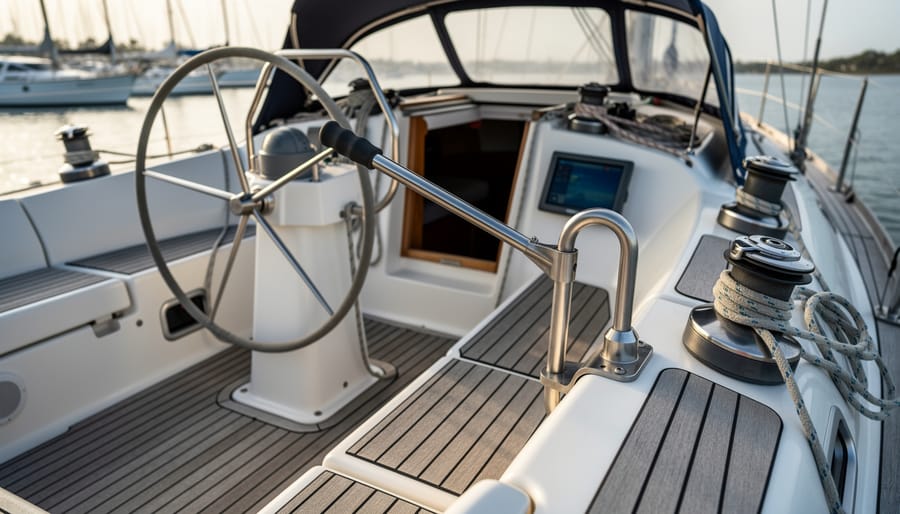
Two fundamental installation approaches serve different operational philosophies. Permanent installations mount the tiller assembly in place with the arm secured in a ready position, allowing instant deployment by releasing retaining clips or swinging the arm into operating position. This configuration prioritizes response time and eliminates the risk of not finding the tiller during an emergency, but dedicates permanent space in the steering compartment.
Portable emergency tillers, conversely, stow separately and require manual installation onto the rudder post when needed. The operator must access the rudder post area, position the tiller fitting onto the post (often a square or keyed connection), and secure it with pins, set screws, or locking collars. While this approach preserves space and protects the tiller from constant marine exposure, it demands that crew members know the exact storage location, understand the installation procedure, and can execute it under potentially challenging conditions.
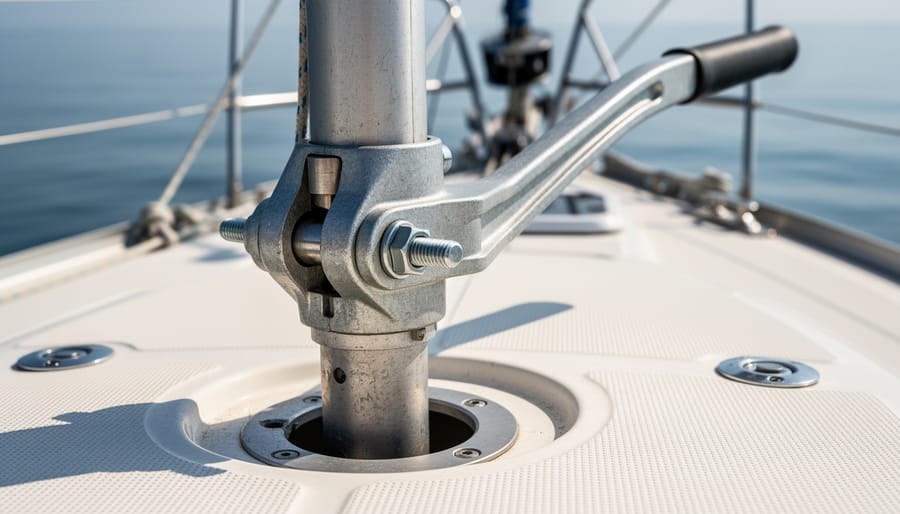
The connection interface between tiller and rudder post varies by manufacturer and vessel. Common configurations include square tapers, keyed shafts, and splined connections, each requiring precise fitment to prevent slippage under load. The mechanical advantage, the ratio between tiller arm length and the force required to turn the rudder, determines how effectively you can steer, particularly in rough conditions when water pressure on the rudder surface creates significant resistance.
Key Factors When Selecting an Emergency Tiller
Vessel Size and Rudder Post Configuration
The relationship between vessel size and rudder post configuration determines everything about emergency tiller design. A tiller that works perfectly on a 30-footer becomes dangerously inadequate on a 45-foot vessel with triple the displacement.
Start with displacement, not just length. A heavy 38-foot cruiser displacing 18,000 pounds requires substantially more mechanical advantage than a lighter performance boat of similar length. Rudder resistance increases exponentially with displacement and sea state, what you can control in calm water becomes impossible in rough conditions without proper leverage.
Rudder post diameter and shape dictate the tiller’s mounting interface. Most posts range from 1.5 to 3 inches in diameter, with configurations including round, square, and keyed designs. Measure your rudder post precisely: diameter at the mounting point, exposed length above the quadrant or wheel system, and any taper. Square posts need exact dimensional matching; round posts allow slight tolerance but require secure clamping to prevent slippage under load.
Torque requirements scale with rudder area and vessel speed. A 50-foot yacht with a large spade rudder might need 150-200 foot-pounds of torque to maintain steerage in heavy weather. Calculate this by multiplying required force by tiller length, a six-foot tiller needing 30 pounds of force at the handle delivers 180 foot-pounds of torque. Undersized tillers fail exactly when you need them most.
Material Construction and Durability
Material selection determines whether an emergency tiller will function when you need it. The three primary materials each bring distinct trade-offs in strength, weight, and longevity.
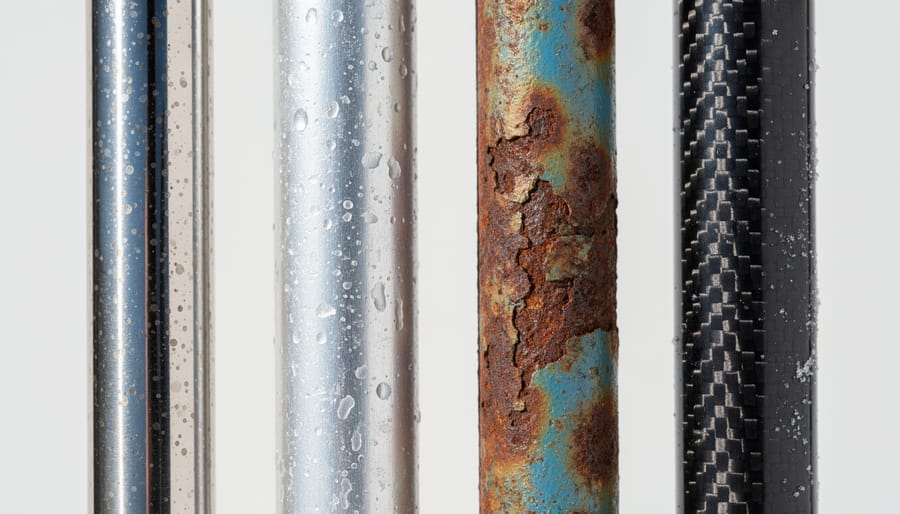
Stainless steel (typically 316 grade) offers maximum strength and virtually unlimited service life in saltwater environments. It resists bending under extreme loads, which matters when you’re fighting heavy weather with no hydraulic assist. The downside: weight. A stainless tiller for a 40-footer can exceed 15 pounds, making storage and single-handed deployment more challenging.
Aluminum tillers, usually marine-grade 6061-T6, deliver excellent strength-to-weight ratios at roughly half the weight of equivalent stainless steel. They’re easier to handle and store, but demand rigorous corrosion prevention. Anodizing helps, yet aluminum remains vulnerable to galvanic corrosion when coupled with dissimilar metals at rudder post connections. Expect more frequent inspections and potential replacement within 10-15 years in tropical saltwater.
Composite and reinforced fiberglass options have emerged for smaller vessels under 35 feet. These materials resist corrosion entirely and weigh less than metal alternatives, but lack the rigidity needed for larger rudders. They can flex or fail under high loads.
| Material | Strength | Weight | Corrosion Resistance | Typical Applications |
|---|---|---|---|---|
| Stainless Steel (316) | Excellent | Heavy | Excellent | Offshore cruisers, large sailboats, professional vessels |
| Aluminum (6061-T6) | Good | Moderate | Fair (requires coating) | Mid-size cruisers, weight-sensitive installations |
| Composite/Fiberglass | Moderate | Light | Excellent | Small sailboats under 35 feet, day sailors |
Your choice should match your vessel’s operating environment. Year-round tropical sailors lean toward stainless steel for its longevity. Seasonal temperate-water cruisers can manage aluminum with proper maintenance. Composites work for protected waters and smaller boats where ultimate strength isn’t paramount.
Mounting and Storage Considerations
The most perfectly engineered emergency tiller becomes useless if you can’t reach it during a steering failure. Storage location determines whether you’ll deploy your backup system in seconds or waste critical minutes searching while your vessel drifts toward hazards.
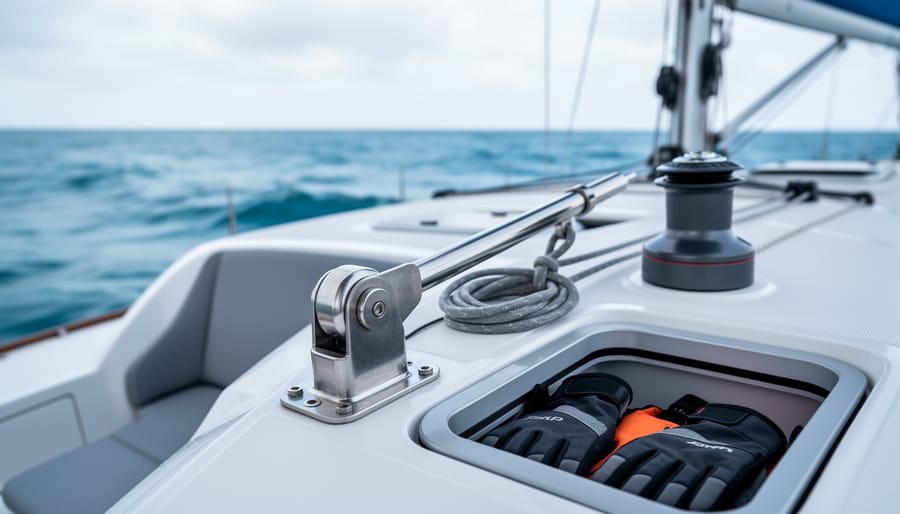
Mount the tiller in the cockpit area where the helmsman can access it without leaving the wheel. Common locations include lazarette lockers with dedicated clips or brackets, cockpit seat storage with quick-release straps, or dedicated deck-mounted brackets near the steering pedestal. Avoid below-deck storage that requires opening hatches or navigating companionways during rough conditions.
Design your storage solution to protect the tiller from UV degradation and salt spray while allowing instant removal. Stainless steel mounting brackets with captive fasteners eliminate the risk of dropped hardware during deployment. Waterproof covers or bags prevent corrosion without adding deployment steps, choose designs that tear away or unzip in one motion.
Practice retrieving and installing your tiller while wearing foul-weather gear and safety harnesses. What seems accessible in calm conditions becomes challenging when the boat is heeling and waves are breaking over the cockpit. If deployment takes longer than sixty seconds during your test, reconsider your storage arrangement. Mark the storage location with high-visibility labels, and ensure all crew members know exactly where the emergency tiller lives.
Mechanical Advantage and Leverage
The length of an emergency tiller directly determines your mechanical advantage when fighting rudder resistance. A longer arm multiplies your input force, which becomes critical when trying to move a large rudder against water pressure, particularly in rough seas or when the vessel is moving at speed.
Calculate required length by considering your vessel’s displacement and typical operating conditions. A 40-foot sailboat typically needs a tiller extending 3-4 feet from the rudder post to generate sufficient leverage for one person to maintain steering control. Heavier vessels or those with deep, high-aspect-ratio rudders demand proportionally longer tillers, sometimes reaching 5-6 feet.
The trade-off lies in cockpit space. An extended tiller that provides excellent mechanical advantage can interfere with crew movement, winches, or other deck equipment during emergency operations. Some owners compromise by selecting a length that requires two people to operate effectively rather than creating a hazard with an unwieldy single-person system.
Test your calculations before committing. The tiller should allow sustained steering at displacement speed in moderate seas without exhausting the helmsperson. If turning the rudder fully requires two hands and considerable effort even in calm conditions, you need more leverage.
Compatibility and Custom vs. Universal Designs
The choice between manufacturer-specific and universal emergency tillers hinges on your rudder post configuration and available budget. Manufacturer-specific designs offer precise fitment and often include engineered mounting brackets that attach directly to existing steering system components, eliminating guesswork during installation. These work best for vessels with standard production steering systems from major builders like Edson, Whitlock, or Jefa.
Universal emergency tillers accommodate varying rudder post shapes and diameters through adjustable clamps or interchangeable socket fittings. While they sacrifice some precision of fit, quality universal designs provide reliable performance across diverse installations at lower cost. They’re particularly valuable for older vessels, custom builds, or situations where manufacturer-specific options aren’t available.
Custom fabrication becomes necessary when rudder post geometry, cockpit layout, or unusual steering configurations prevent off-the-shelf solutions from working effectively. Marine fabricators can engineer tillers that address offset rudder posts, limited cockpit access, or extreme leverage requirements. The investment makes sense for vessels over 50 feet or those with non-standard steering arrangements where safety cannot be compromised by marginal compatibility.
Types of Emergency Tillers Compared
Fixed vs. Portable Emergency Tillers
Fixed emergency tillers remain permanently mounted on or near the rudder post, typically secured under cockpit seats or along transom bulkheads with quick-release fittings. They offer immediate access during steering failures, no searching through lockers or wrestling with heavy equipment while the vessel drifts. The tiller arm stays in position, requiring only engagement to the rudder post coupling. This instant availability proves critical when steering loss occurs in confined waters or heavy weather.
The primary drawback is cockpit space consumption. A fixed tiller occupies valuable real estate, potentially interfering with crew movement, sail handling, or cockpit lounging. On smaller vessels under 35 feet, the compromise becomes significant. Owners often find the protruding arm catches sheets, steps over it become routine, and aesthetics suffer.
Portable emergency tillers store in dedicated compartments, preserving clear cockpit space during normal operations. They’re typically shorter when stowed, using telescoping sections or assembled components. This approach suits vessels where cockpit space is premium or where the owner accepts a deployment delay in exchange for daily convenience.
The trade-off centers on risk tolerance. Fixed systems answer steering failures in seconds. Portable units require retrieval, assembly, and installation, tasks complicated by boat motion, darkness, or panic. However, portable tillers often provide better mechanical advantage through longer assembled lengths, and they’re protected from UV degradation and accidental damage during storage.
Your choice should reflect your typical operating environment and crew capabilities under stress.
Telescoping and Adjustable Systems
Telescoping emergency tillers solve one of the fundamental contradictions in backup steering design: the need for maximum leverage versus practical storage constraints. A longer tiller arm provides greater mechanical advantage when fighting a stuck rudder in heavy weather, but cockpit lockers have finite dimensions. Adjustable systems collapse to 30-40% of their deployed length, fitting into standard cockpit storage while extending to 6-8 feet when needed.
The engineering challenge lies in the locking mechanism. Quality telescoping tillers use stainless steel pins or cam-lock systems that engage at multiple length settings, allowing you to dial in the exact leverage needed without collapsing under load. Cheaper friction-lock designs can slip during hard steering, creating a dangerous situation precisely when you need reliability most.
Weight distribution changes as the tiller extends. A well-designed telescoping system maintains balance across adjustment points, preventing awkward handling. Some models incorporate graduated length markings, letting you preset the deployment position during practice sessions and replicate it instantly during an actual steering failure.
The trade-off is complexity. More moving parts mean more potential corrosion points and maintenance requirements compared to fixed-length tillers.
Custom-Fabricated Solutions
Custom fabrication becomes necessary when a vessel’s rudder post geometry, cockpit layout, or steering system falls outside standard configurations. Production boats with factory-installed modifications, classic yachts with non-standard steering systems, and vessels with unusual rudder post locations often require bespoke emergency tillers that off-the-shelf products cannot accommodate.
Commission a custom tiller when the rudder post is inaccessible with standard designs, when unusual post shapes or square-section stocks prevent universal fittings from securing properly, or when cockpit obstructions demand non-traditional leverage angles. High-performance racing yachts with carbon rudder stocks and motor yachts with twin-rudder configurations typically need engineered solutions that account for specific material properties and mechanical loads.
Work with marine fabricators experienced in steering systems who can calculate required torque, select appropriate materials for your operating environment, and design mounting interfaces that won’t damage the rudder post under emergency loads. Expect to provide detailed measurements, photographs of the rudder head area, and information about typical sea conditions.
Emergency Tiller Recommendations by Vessel Type
Sailboats Under 35 Feet
For sailboats under 35 feet, portability and solo deployment capability define the ideal emergency tiller. Smaller cruising vessels typically feature lighter displacement and more manageable rudder loads, allowing compact tiller designs that one person can retrieve, install, and operate without assistance.
A telescoping aluminum tiller in the 36-48 inch range provides optimal balance between leverage and storage efficiency. These units collapse to 24 inches or less, fitting into cockpit lockers or mounting brackets behind seats without consuming precious space. Aluminum construction keeps weight under 8 pounds while delivering adequate strength for rudder posts up to 1.5 inches diameter, common on boats in this size range.
Universal socket fittings with quick-release pins eliminate fumbling with tools during deployment. The tiller should extend to at least 42 inches for sufficient mechanical advantage in choppy conditions, yet retract enough to clear companionway access and genoa sheets. Test deployment quarterly, timing yourself from storage to operational, it should take under 90 seconds. Stow the tiller where you can reach it from the helm position, not buried beneath rarely-used gear in a forward locker.
Mid-Size Sailboats (35-50 Feet)
Mid-size sailboats demand emergency tillers that deliver substantial mechanical advantage without consuming excessive cockpit space. Vessels in this range typically feature 2 to 2.5-inch rudder posts and displacements between 15,000 and 35,000 pounds, requiring tillers with 48 to 60 inches of working length to generate adequate leverage in heavy weather.
Telescoping stainless steel designs excel here, offering 30-inch storage footprints that extend to full working length when deployed. Look for models with positive locking mechanisms at multiple positions, allowing you to adjust leverage based on conditions. The extra length proves critical when steering through following seas or managing weather helm under storm sails.
For offshore passages, prioritize corrosion-resistant construction and dual-point rudder post engagement. Some bluewater sailors mount permanent tillers beneath cockpit seats with quick-release covers, ensuring deployment within 60 seconds even in rough conditions. Test your system while sailing in 15-knot winds to verify you can maintain course without excessive physical strain during extended periods at the helm.
Large Sailboats and Motor Yachts (50+ Feet)
Vessels exceeding 50 feet present the most demanding emergency tiller requirements due to rudder size, displacement, and the forces involved in manual steering. You’ll need a heavy-duty system engineered for substantial mechanical advantage, typically 6 to 10 feet in length when fully deployed, to generate sufficient torque against rudder resistance in seaway conditions.
Most systems in this category require stainless steel construction with reinforced socket fittings capable of handling the stress loads. The mechanical forces exceed what one person can safely manage; plan for two-crew operation during deployment and steering maneuvers. Integration with hydraulic and electric steering systems becomes more complex, often requiring custom fabrication to accommodate non-standard rudder post configurations, especially on motor yachts with twin-rudder installations.
Storage presents particular challenges given the tiller’s size. Dedicated mounting brackets installed near the steering station ensure accessibility without obstructing normal operations. Some owners install sectional designs that assemble quickly but store more compactly. Factor in crew training, these systems demand practiced coordination between helm and muscle power to maintain directional control in emergency conditions.
Commercial and Charter Vessels
Commercial and charter vessels face distinct emergency tiller requirements shaped by regulatory frameworks and operational demands. Coast Guard regulations mandate backup steering capability for vessels carrying passengers for hire, with documentation proving the emergency tiller can effectively control the rudder under design load conditions.
Professional operators need systems engineered for reliability under inspection scrutiny. This means robust construction with corrosion-resistant materials, clear installation documentation, and maintenance records that satisfy surveyors. The emergency tiller must accommodate crew rotation, multiple operators of varying experience levels should be able to deploy and use it without specialized knowledge.
Charter operations particularly benefit from permanently mounted systems that eliminate storage confusion and ensure immediate availability regardless of which crew is aboard. Training protocols should include tiller deployment drills during crew changeovers, documented in vessel operating procedures.
Budget for systems meeting classification society standards rather than recreational-grade equipment. The cost difference is minor compared to operational downtime or regulatory non-compliance during annual inspections.
Common Mistakes to Avoid When Choosing an Emergency Tiller
Undersizing for Vessel Displacement
Undersizing an emergency tiller ranks among the most dangerous selection errors. A tiller lacking sufficient length and mechanical advantage cannot overcome rudder resistance, particularly under load or in rough seas. The physics are unforgiving: a 40-foot sailboat with inadequate tiller leverage becomes unsteerable precisely when you need control most, during a steering system failure in challenging conditions.
Vessel displacement directly correlates with rudder size and the force required to turn it. Many owners select tillers based on boat length alone, ignoring displacement. A heavy-displacement cruiser requires substantially more leverage than a light racing boat of identical length. The result: crew members physically unable to turn the rudder against water pressure, rendering the emergency tiller useless when it matters.
Proper sizing demands calculating the minimum effective length based on your vessel’s displacement and rudder post diameter. Consult with marine systems specialists who can assess your specific requirements rather than purchasing a universal solution that may prove inadequate in actual emergency conditions.
Inaccessible Storage Locations
Storing an emergency tiller in a forward lazarette, deep locker, or beneath cockpit cushions defeats its purpose entirely. During a steering failure, particularly in rough conditions when the system is most likely to fail, you need immediate access without moving gear, opening multiple hatches, or navigating below deck. The ideal location places the tiller within arm’s reach of the helm station, secured yet instantly retrievable. Vessels with dedicated emergency tiller brackets mounted on the cockpit coaming or transom provide the fastest deployment. If a dedicated mount isn’t practical, the tiller should be the top item in an accessible cockpit locker, clearly labeled and never buried beneath other equipment.
Failure to Test and Practice
Purchasing an emergency tiller without conducting regular deployment drills creates a false sense of security that can prove catastrophic during an actual steering failure. Many vessel owners store their tiller immediately after purchase and never practice the installation procedure, leaving them fumbling with unfamiliar equipment during high-stress emergencies when every second counts.
The physical demands of emergency tiller operation differ dramatically from standard helm control. Without practice, crews struggle to generate adequate leverage, maintain course in heavy seas, and coordinate multi-person steering operations on larger vessels. Schedule quarterly drills where each crew member practices removing the tiller from storage, connecting it to the rudder post, and executing basic maneuvers. Time these exercises and document any difficulties encountered, then address accessibility or mechanical issues before facing real emergencies.
Neglecting Corrosion Prevention
An emergency tiller stored for months or years without proper corrosion protection can seize to the rudder post or develop structural weaknesses that compromise its function during an actual emergency. Stainless steel components still require regular inspection and lubrication, particularly at connection points and pivot mechanisms. Aluminum tillers need protective coatings maintained to prevent galvanic corrosion when contacting dissimilar metals on the rudder post. Apply marine-grade anti-seize compound to mating surfaces before storage, inspect fasteners annually for crevice corrosion, and verify that the tiller can still be fitted to the rudder post under realistic conditions. A corroded emergency tiller that cannot be deployed defeats its entire purpose as backup steering equipment.
Installation and Integration Best Practices
Proper installation of an emergency tiller begins with verifying the rudder post fitting compatibility. Before purchase or fabrication, measure the rudder post diameter, shape, and keyway configuration at the point where the tiller will attach. The mounting socket must fit securely without play, any looseness compromises steering control when loads are highest. For custom installations, template the rudder post with cardboard or wood to ensure precise machining of the tiller’s engagement fitting.
Storage location is as critical as the tiller itself. Mount the unit within immediate reach of the helm station, ideally in the cockpit lazarette or a dedicated bracket accessible from the steering position. Storage should protect against corrosion while allowing one-person retrieval in under thirty seconds, even at night or in rough conditions. Secure the tiller with quick-release fasteners rather than bolts requiring tools, emergencies don’t wait for searching through toolboxes.
Document the installation with labeled diagrams showing attachment points, orientation, and engagement sequence. Laminate these instructions and store copies with the tiller and near the helm. Include rudder post dimensions and any vessel-specific quirks discovered during testing. This documentation proves invaluable when unfamiliar crew or emergency responders must operate the system.
Testing separates functional installations from liabilities. Conduct full deployment and steering trials at least twice annually, including in moderate sea conditions if possible. Practice with all regular crew members to build muscle memory. Time the deployment process: if it takes more than two minutes from storage to steered control, reassess your storage location or securing method. Test steering response through the full rudder travel range, discovering binding or insufficient leverage during trials beats discovering it during an actual steering failure.
Coordinate emergency tiller installation with regular maintenance schedules for hydraulic rams, steering cables, and autopilot systems. Inspect the tiller’s engagement socket for corrosion, cracks, or wear each season. Apply marine-grade anti-seize compound to contact surfaces annually to prevent galvanic corrosion that could lock components together or weaken critical joints.
Frequently Asked Questions
Understanding the practical aspects of emergency tiller selection and use often requires answering specific questions that go beyond general selection criteria. These frequently asked questions address the most common concerns vessel owners raise when evaluating emergency tiller systems for their boats.
Are emergency tillers required by law?
Regulatory requirements vary by vessel type, size, and operational area. Many commercial vessels and charter boats operating offshore must carry emergency steering capability under SOLAS and national maritime regulations, but recreational vessels typically face no universal mandate. Check with your flag state, classification society, or local maritime authority for specific requirements that apply to your vessel.
How much leverage do I actually need for my vessel?
The required leverage depends on rudder size, vessel displacement, and expected sea conditions during emergency operation. As a general guideline, the tiller arm should provide enough mechanical advantage that two crew members can operate the rudder in moderate seas, which typically translates to a minimum length of 48-60 inches for vessels over 40 feet. Test your specific installation under controlled conditions to verify adequate leverage before you need it in an emergency.
Can I fabricate my own emergency tiller instead of buying one?
Custom fabrication is feasible if you have accurate rudder post dimensions, access to appropriate marine-grade materials, and welding or machining capabilities. Many experienced vessel owners successfully build custom tillers, particularly for unusual rudder post configurations where commercial options don’t fit. However, ensure your fabrication can withstand the significant forces involved in emergency steering, and have the fitting professionally verified before relying on it offshore.
How often should I test my emergency tiller?
Best practice calls for testing emergency tiller deployment and operation at least twice per season, or before any extended voyage. These tests should include removing the tiller from storage, installing it on the rudder post, and actually steering the vessel to confirm both fit and adequate leverage. Annual inspection for corrosion or damage is essential, with particular attention to the rudder post fitting and any telescoping mechanisms.
Beyond these common questions, vessel owners should recognize that emergency tiller systems require the same commitment to maintenance and familiarity as any other safety equipment. The most sophisticated emergency tiller proves worthless if crew members cannot locate it, deploy it quickly, or operate it effectively under stress.
Installation considerations also raise questions about professional assistance versus owner installation. While many emergency tillers can be installed by competent vessel owners, systems requiring permanent cockpit modifications, integration with deck hardware, or custom fabrication benefit from professional marine installation. The critical factor is ensuring secure attachment to the rudder post and verifying that the installation provides adequate leverage without interfering with normal vessel operation or creating hazards in the cockpit.
For vessels with unusual rudder post configurations, non-standard shapes, or limited access, custom solutions become necessary. Marine fabricators experienced in steering systems can create emergency tillers for virtually any rudder post geometry, including square posts, tapered designs, and installations with restricted cockpit access. These custom solutions typically cost more than universal designs but deliver the precise fit and performance needed for reliable emergency steering on vessels that cannot accommodate off-the-shelf options.
Selecting the right emergency tiller is not a contingency to postpone, it’s a fundamental safety decision that demands the same rigor you apply to navigation electronics or life-saving equipment. When hydraulic lines fail 200 miles offshore or an electrical fault disables your autopilot in heavy weather, the emergency tiller becomes your only means of controlling the vessel and reaching safe harbor.
The recommendations throughout this guide underscore a central principle: one-size-fits-all solutions rarely serve vessels well. A 32-foot coastal cruiser requires different mechanical advantage than a 55-foot bluewater passage-maker. Your rudder post configuration, displacement, typical operating conditions, and crew capabilities all factor into the specification process. Choosing based solely on price or convenience invites compromise precisely where you cannot afford it.
Beyond acquisition, remember that an untested emergency tiller offers false security. Schedule regular deployment drills with your crew. Verify that mounting hardware remains corrosion-free and accessible. Confirm that every person aboard knows the procedure for rigging the system under stress.
At Marine Electronics Integration, we recognize that backup steering deserves the same systems-thinking approach we bring to navigation, communication, and propulsion systems. Our marine electronics specialists work with vessel owners and maritime professionals to evaluate specific requirements, recommend appropriate solutions, and ensure seamless integration with existing steering systems.
Whether you’re commissioning a new vessel, upgrading safety equipment, or addressing regulatory compliance requirements, we’re here to provide expert guidance tailored to your operational profile. Contact our team to discuss your emergency tiller requirements and ensure your vessel maintains steering control when it matters most.